

Explore the Content:
- What Is Equipment Rental Management Software?
- 6 Most Popular Equipment Rental Management Software in 2026
- Best Equipment Rental Management Softwares at a Glance
- How to Choose the Best Equipment Rental Booking Software
- What Is the Best Equipment Rental Software?
- Conclusion
- FAQs
The global construction equipment rental market hit USD 132.35 billion in 2025 and is projected to reach USD 229.19 billion by 2034, growing at 6.4% annually. As demand climbs, the pressure to operate efficiently has never been higher.
Without the right system in place, rental businesses face double bookings, poor inventory visibility, and slow billing processes that drain time and profit. That's where equipment rental management software makes the difference.
This guide breaks down the 6 best equipment rental management software platforms for 2026, comparing features, strengths, and who each tool works best for — so you can make a confident, informed decision.
What Is Equipment Rental Management Software?

Equipment rental management software is a digital system that manages inventory, bookings, maintenance, and billing for rental businesses. Instead of juggling spreadsheets, phone calls, and paper forms, everything lives in one centralized platform.
Modern systems allow rental businesses to:
- Track equipment availability in real time
- Accept online bookings and payments
- Automate invoices and rental agreements
- Manage maintenance schedules
- Monitor performance across multiple locations
Whether you run a small tool rental shop or a large multi-location operation, the right software keeps your fleet working, your customers happy, and your books accurate.
6 Most Popular Equipment Rental Management Software in 2026
1. RentMy
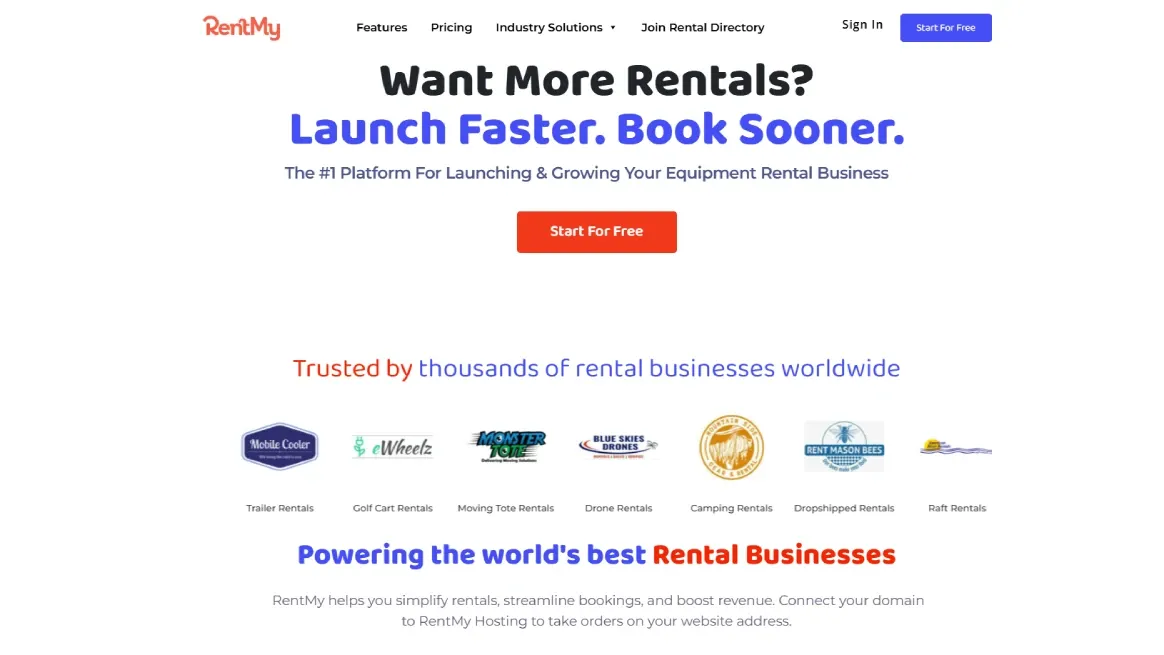
RentMy is an all-in-one equipment rental software built for businesses that want to scale without the operational headaches. It brings online reservations, asset tracking, payments, and reporting into a single dashboard, giving you full visibility over your inventory and daily operations.
RentMy is designed specifically for rental operators, making it easy to manage everything from digital contracts and customer communications to automated billing and multi-location inventory. Whether you're handling walk-ins, phone orders, or online bookings, it all flows through one place.
Key Features
- Real-time equipment inventory tracking
- Online booking calendar with live availability
- Digital contracts with e-signature support
- AI-powered product images and descriptions
- Automated invoices and recurring rentals
- Multi-location inventory management
Pros
- Simple, clean interface
- Customizable without high costs
- Helpful onboarding and training
- No extra commission on payments
Cons
- Limited third-party integrations
- Detailed reporting varies by plan
Try RentMy for free. Manage equipment, payments, and bookings in one place without the usual back-and-forth. Get started today — free trial, no credit card required.
2. Quipli
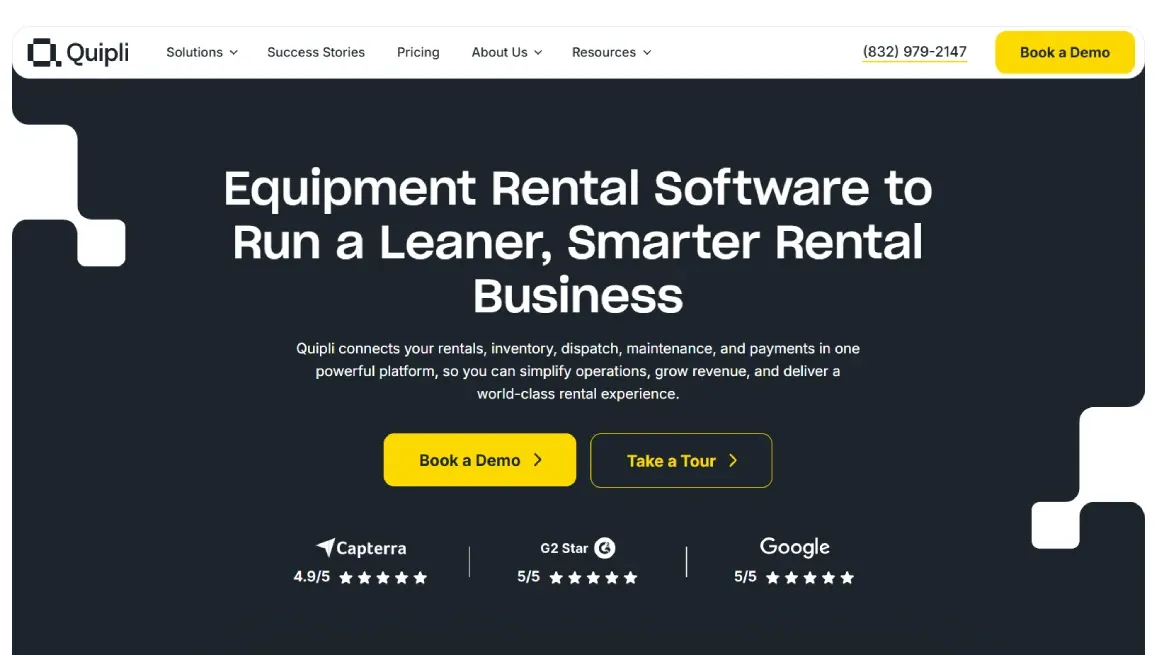
Quipli is a cloud-based solution designed for independent rental businesses, emphasizing online reservations, fleet visibility, and service tracking. It uses a flat yearly pricing model per location, which makes budgeting predictable for small and mid-sized operators.
Quipli works well for businesses that need strong maintenance tracking alongside standard booking features. Its customer portal makes it easy for renters to manage their own reservations online.
Key Features
- Online reservations and customer portal
- Real-time fleet tracking
- Maintenance and repair management
- Equipment usage history
- Unlimited users and inventory
Pros
- Easy-to-use interface
- Strong customer support
- Flat pricing model
Cons
- Limited data on some screens
- Navigation may feel slow
- Requires stable internet access
3. Rentman
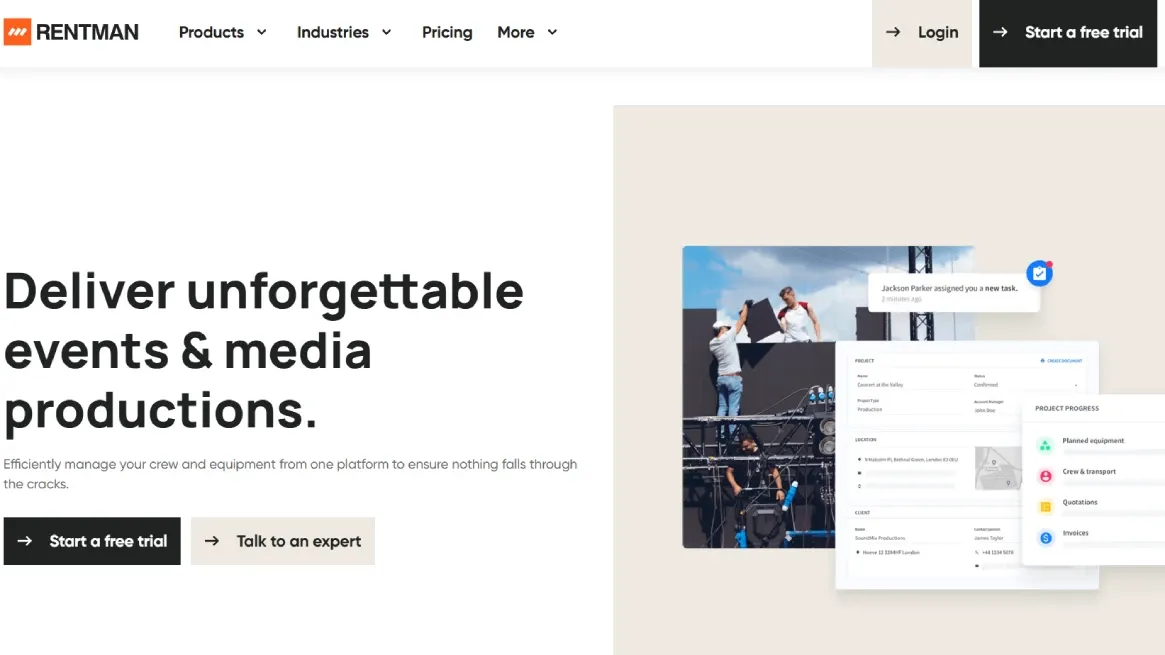
Rentman is a powerful platform built for complex rental operations. It handles large inventories and multiple locations through scheduling, billing, customer access, and maintenance planning. This makes it a go-to for enterprise-level rental companies with demanding workflows.
Rentman's strength is its depth — it manages the full asset lifecycle with detailed audit logs and API integrations. However, that same complexity can make it feel heavy for smaller teams.
Key Features
- Inventory and asset tracking
- Quotes, billing, and invoices
- Asset lifecycle management
- Activity and audit logs
- API integrations
Pros
- Strong rental and quote tools
- Helpful support team
- Organized system design
Cons
- Limited serial-level tracking
- Mobile app has fewer features
- Can feel complex for small teams
- Pricing rules harder to set
- Not ideal for very small rentals
4. Booqable
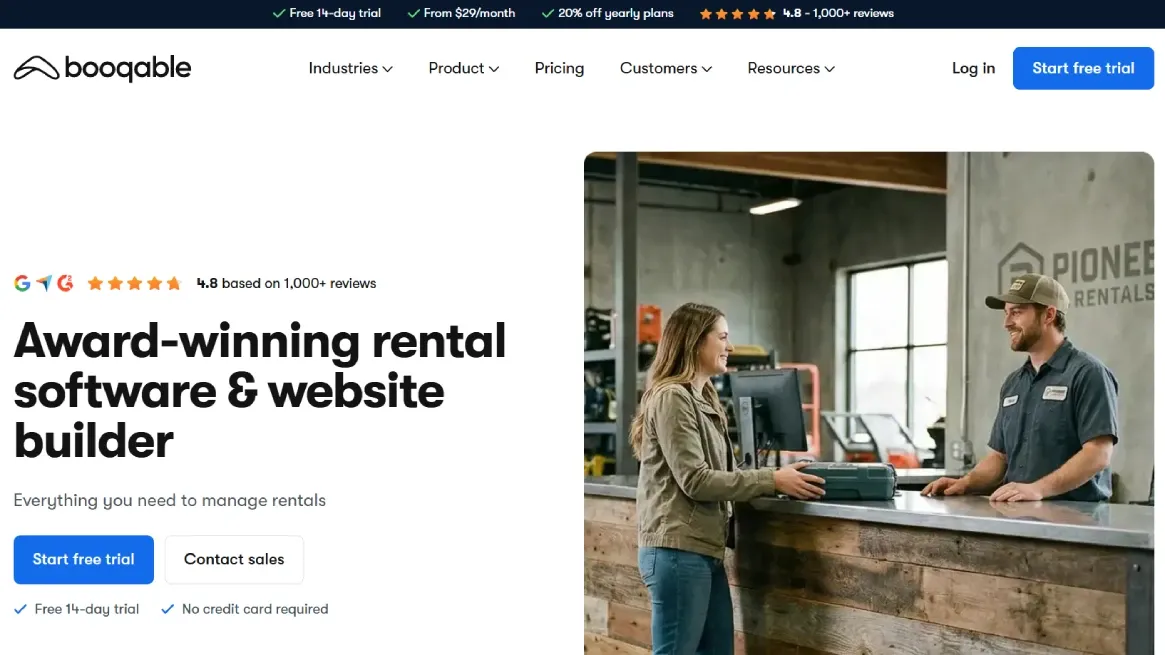
Booqable is a cloud-based platform for small and mid-sized businesses. It combines online store tools, automated bookings, and live inventory tracking for streamlined order processing. The built-in website builder and embeddable store make it easy to take your rental business online quickly.
Booqable shines for businesses that prioritize a clean customer-facing experience. Setup is fast, and the interface is intuitive enough that small teams can be up and running within hours.
Key Features
- Dual tracking for bundles and individual items
- Built-in website builder and embeddable store
- Real-time availability calendar
- Invoicing, deposits, and payments
- Custom contracts with digital signatures
Pros
- Strong online store tools
- Automates booking workflows
- Quick setup for small teams
Cons
- No delivery acknowledgement confirmation
- Limited reporting
- Advanced features require higher plans
5. Yo!Rent
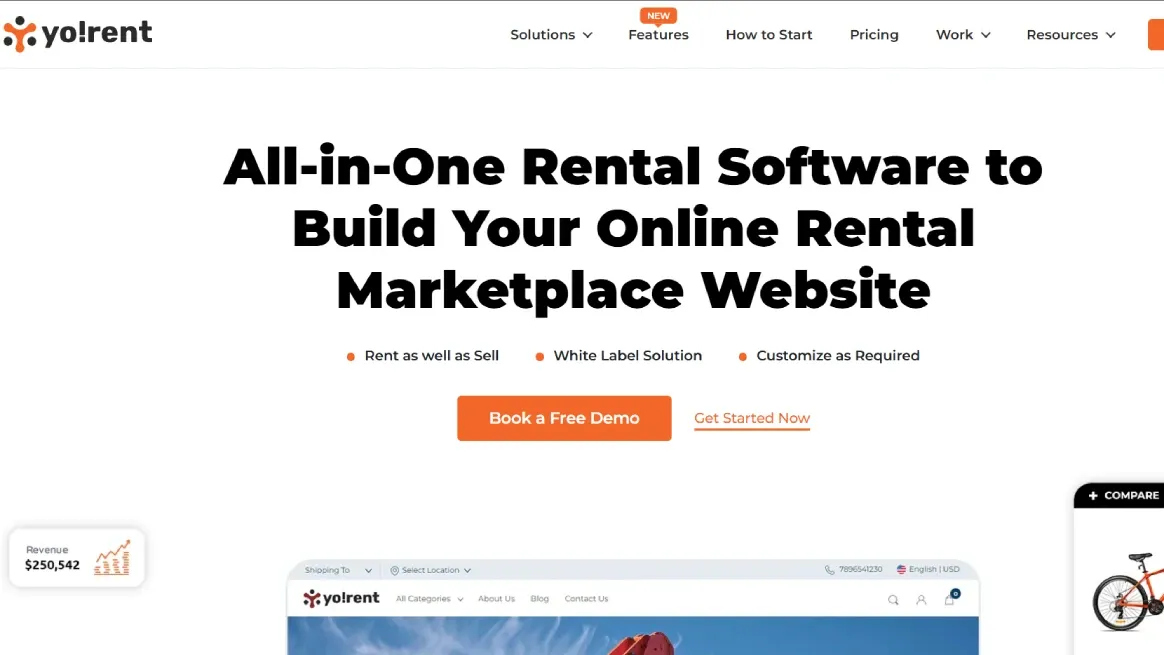
Yo!Rent is self-hosted software built for multi-vendor marketplaces. It supports hybrid rent-and-sell models, flexible booking periods, and global operations with full branding control. The one-time license fee model makes it attractive for businesses that want to avoid ongoing subscription costs.
This platform suits operators building a marketplace rather than a single-store rental operation. Setup requires technical resources, but the long-term flexibility is significant.
Key Features
- Automatic late fee calculation
- Real-time inventory and maintenance tracking
- RFQ system for custom quotes
- Document verification and e-signatures
- Tax and shipping management
Pros
- One-time license with no monthly fee
- Highly customizable branding
- Strong multi-vendor tools
Cons
- Requires technical setup
- Steeper learning curve
- Fewer built-in integrations
6. EZRentOut
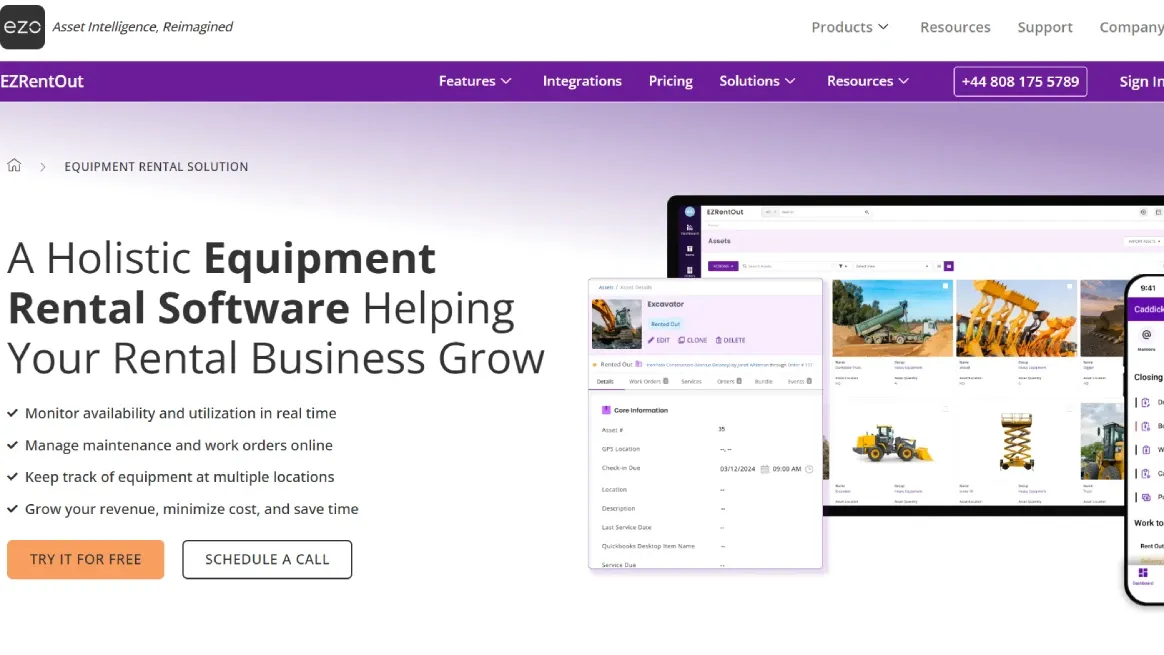
EZRentOut is a full-featured platform for tool, machinery, and AV rentals. It manages the complete rental lifecycle with scheduling, tracking, and maintenance tools for structured control. Barcode and RFID scanning make it especially strong for operations that need detailed asset tracking at every step.
EZRentOut works well for mid-market businesses with complex inventory that needs comprehensive lifecycle management, but smaller operators may find it more system than they need.
Key Features
- Real-time availability tracking
- Drag-and-drop scheduling calendar
- Barcode and RFID scanning
- Automated quotes and invoices
- API and third-party integrations
Pros
- All-in-one rental management system
- Strong maintenance tracking
- Reduces manual work
Cons
- Can overwhelm small businesses
- Limited report customization
- Requires stable internet
Best Equipment Rental Management Softwares at a Glance
| Feature | RentMy | Quipli | Rentman | Booqable | Yo!Rent | EZRentOut |
|---|---|---|---|---|---|---|
| Best For | Overall launch/growth, eCommerce | Maintenance-heavy | Enterprise assets | SMB online stores | Multi-vendor marketplaces | Mid-market lifecycle |
| Inventory Tracking | Real-time sync, AI listings | Fleet visibility | Advanced lifecycle | Dual-tracking | Real-time w/ maintenance | Barcode real-time |
| Online Booking | Instant calendar, SEO AI | Reservations portal | Scheduling | Embeddable store | Advanced calendar | Drag-drop |
| Payments | Stripe w/ hardware, no extra fees | Integrated | Billing | Stripe | Multi-currency | Automated |
| Ease of Use | Intuitive UI, quick onboarding | Simple cloud | Steeper curve | High usability | Custom setup needed | Modern but full-featured |
| Support | Personalized, responsive | Excellent | Top-rated | Varies | Free install/demo | Standard |
| Scalability | Multi-location, growth-focused | Multi-site | Enterprise | SMB | Global multi-vendor | Multi-location |
Disclaimer: Features, pricing, and availability may change at any time. Always check the official website of each provider to confirm the latest details before making a final decision.
How to Choose the Best Equipment Rental Booking Software
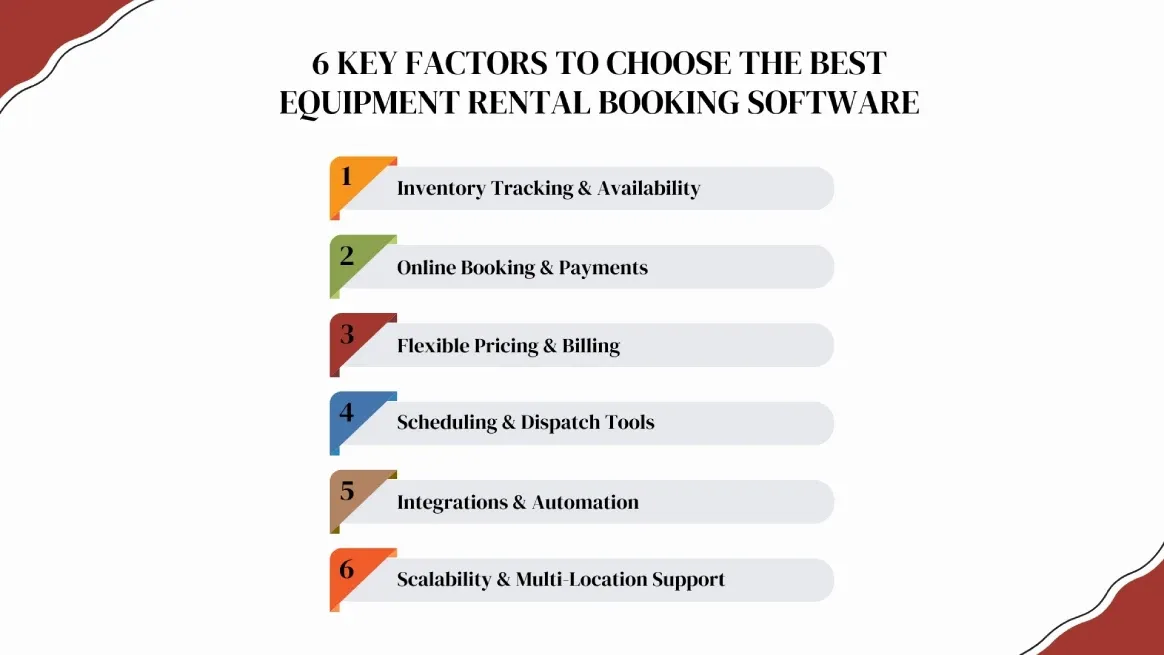
Selecting the right software has a significant impact on your operational efficiency and growth potential. Here are the key considerations:
Real-Time Inventory Visibility
Clear tracking and live availability data prevent double bookings and scheduling conflicts. You need to know exactly where each piece of equipment is at all times.
Online Booking & Secure Payments
Customers should be able to reserve equipment conveniently from any device. A mobile-friendly booking flow with secure payment processing is a standard expectation in 2026.
Flexible Pricing & Billing
Automated hourly, daily, or weekly rate calculations eliminate manual errors and streamline financial operations. Look for a system that handles deposits, partial payments, and refunds without friction.
Scheduling & Dispatch Tools
Coordinated pickup and return logistics keep operations organized and on schedule. Drag-and-drop calendars and scheduling views help your team stay aligned.
Integrations & Automation
Connected systems reduce manual tasks, freeing time for growth. Look for integrations with payment processors, accounting tools, and communication platforms.
Scalability & Multi-Location Support
Growing businesses need platforms that support expansion without requiring a full system replacement. Multi-location management from a single dashboard is a must-have for scaling operators.
Solutions like RentMy consolidate all these features into one organized system so you can grow with confidence.
What Is the Best Equipment Rental Software?
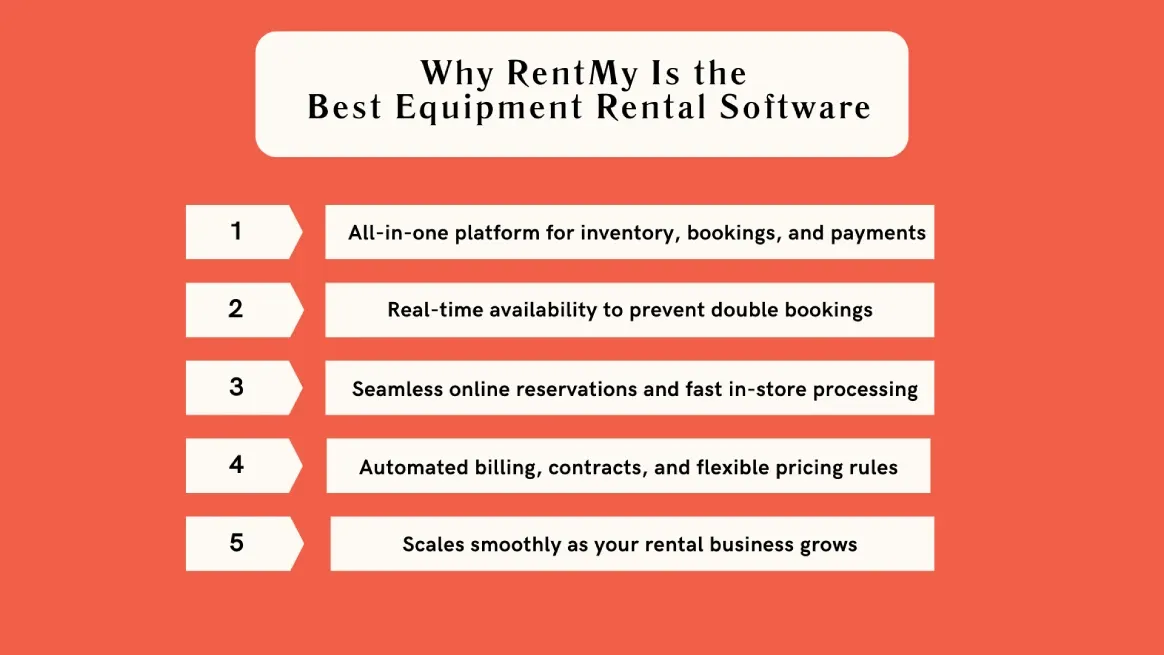
The best equipment rental software combines inventory tracking, online bookings, and payments in one seamless platform. It should display real-time availability to prevent double bookings and make it straightforward for customers to reserve online from any device.
Reliable systems automate invoicing, manage digital contracts, and support variable pricing — reducing disputes and accelerating payments while giving you complete visibility from pickup through return.
RentMy unifies online, phone, and in-person orders through a single dashboard integrating inventory, scheduling, payments, contracts, and reporting. The platform offers scalable plans — Nano Plan for startups, Growth Plan for established operations, and Enterprise for complex needs — ensuring your business can expand confidently without switching systems.
Conclusion
Equipment rental software simplifies tasks, reduces errors, and drives business growth. Selecting the right solution means focusing on the features relevant to your operation, how easy the system is for your team to use, and whether the pricing aligns with your stage of growth.
Rising rental demand means that delays or double bookings rapidly diminish your profits. Smart tools replace guesswork with reliable data and fast decisions, keeping you competitive.
Review your workflow, identify the bottlenecks, and choose software that directly addresses those challenges. Implementing a better system doesn't just save time — it powers confident, sustainable expansion.
FAQs
Can Equipment Rental Software Work for Seasonal Businesses?
Yes, most systems enable usage scaling based on demand fluctuations. This flexibility helps seasonal operations handle peak periods without overpaying for unnecessary features during slower times, providing cost-effective solutions tailored to variable needs.
Is Equipment Rental Software Suitable for Small Startups?
Absolutely. Many solutions accommodate small inventories with simple setup and automation. Startups save time, minimize errors, and scale more easily, avoiding costly system overhauls as they expand.
Can Rental Software Handle Deposits and Partial Payments?
Yes, most systems support deposits, split payments, and refunds. This enables cash flow management, payment flexibility options, and dispute reduction, streamlining transactions for both operators and customers.
Can Multiple Staff Members Use the System at Once?
Yes, most rental systems support multiple user roles. This allows office staff, drivers, and managers to access only the tools they need, enhancing operational efficiency and task coordination across teams.
Does Rental Software Help With Tax and Reporting Needs?
Yes, many tools generate detailed sales reports and tax-ready invoices. This simplifies bookkeeping and ensures accurate financial records prepared for accountants or audits with minimal manual effort.