

Explore the Content:
- Step 1: Laying the Foundation for Your Rental Business
- Step 2: Build a Professional Online Presence That Converts
- Step 3: Organize & Automate Your Operations Early
- Step 4: Marketing Your Startup Rental Company
- Step 5: Retain Customers
- Step 6: Measure Progress & Scale
- Common Mistakes Startup Rental Companies Should Avoid
- FAQs
Are you thinking about how to launch and market a startup rental business but unsure where to start? You're in good company. The U.S. short-term vacation rental market hit $68.64 billion in 2024 and is expected to grow at 7.4% annually through 2030. With demand like that, there has never been a better time to get started.
Whether you're renting baby gear, party supplies, or vehicles, the road from idea to income follows a clear path. This guide walks you through every step — from building your foundation and creating an online presence to automating your operations and retaining loyal customers.
Step 1: Laying the Foundation for Your Rental Business

Before you list your first rental item, you need a solid foundation. The decisions you make early will shape how your business grows, handles challenges, and scales over time.
Draft a Reliable Business Plan
A strong business plan is your roadmap. Start by selecting your niche and establishing clear goals with measurable milestones. Think in terms of concrete targets: monthly revenue goals, booking numbers, and how many customers you want to reach by a specific date.
Document your startup costs and ongoing expenses. Cover everything from equipment and storage to marketing and insurance. Use financial management strategies to track spending and prepare for slow periods.
Before accepting your first rental, secure insurance for your rental business. A proper policy should cover liability, property damage, and lost income if operations pause. This protects you from the unexpected events that can derail new businesses.
Get your legal structure right from the start. Choose between an LLC and sole proprietorship based on your long-term goals. Understand local regulations, zoning requirements, and sales tax obligations. Define your pricing models, refund policies, payment systems, and communication protocols in advance so your team can follow consistent procedures.
Choose Your Niche Wisely
The rental niche you choose should align with both your location and your interests. If you are passionate about what you rent, it shows in the customer experience.
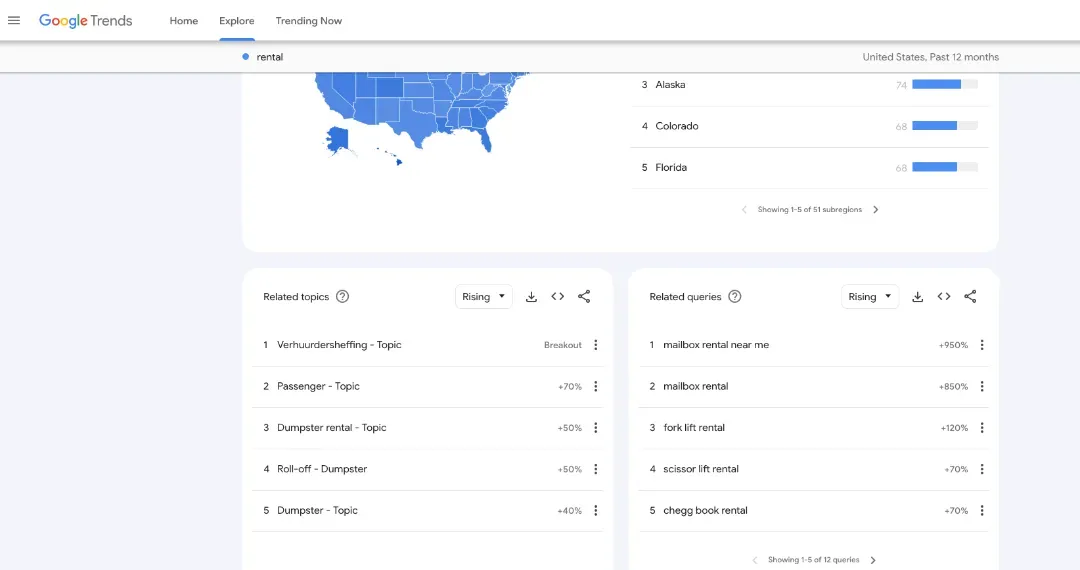
Use Google Trends to research demand patterns in your area. Examine competitor performance and validate that customers are actively searching before you commit resources to a specific category.
Know Your Customers
Understanding who you serve is as important as knowing what you rent. Conduct surveys and review feedback from competitors. Identify distinct customer segments and their specific needs. A family renting party equipment has different expectations than a contractor renting tools.
Analyze your competitors' strengths and weaknesses. Where they fall short is where you can win. Keep ongoing feedback channels open through email, polls, and social media monitoring so your understanding of customers evolves as your business does.
Build a Brand That Sticks
Your brand is the first impression every potential customer forms. Choose a business name that is memorable and easy to say. Design a professional logo that reflects your personality — playful, professional, or premium depending on your market.
Build a clean, user-friendly website with high-quality photography and clear pricing. Maintain consistency in your colors, fonts, and styling across every platform. A cohesive brand makes your business look established even when you are just starting out.
Step 2: Build a Professional Online Presence That Converts

Your website is not just a digital business card — it is your best sales tool. While social media reaches audiences, a website gives you full control over the customer journey.
Build a Website That Outshines Social Media Pages
Social media platforms change their algorithms constantly. A website you own cannot be switched off or buried in a feed update. Over 60% of global web traffic now comes from mobile devices, which means your site needs to load fast and look great on every screen.
Build with SEO in mind from day one. Use SEO strategies for your rental business to help customers find you when they search for your services locally.
Design Product Listings That Drive Bookings
A great listing does more than list features — it tells a story. Use action-oriented photography that shows your items in real-world contexts. Craft titles that emphasize customer benefits, not just specifications. Include comprehensive details such as dimensions, setup requirements, and usage instructions.
Help customers visualize enjoying the rental. A bounce house listing that describes the joy of children's birthday parties converts better than one that only lists dimensions.
Show Clear Pricing to Win Customer Confidence
Transparent pricing builds trust and reduces booking abandonment. Show daily rates, deposits, delivery fees, and late charges clearly before the customer reaches checkout. When people know exactly what they are paying, they book with confidence.
Use Booking Calendars to Prevent Double-Bookings
Real-time availability systems do two things at once: they prevent scheduling conflicts and build customer confidence. When someone books a rental, they want instant confirmation — not a follow-up email 24 hours later. A live booking calendar delivers that reassurance automatically.
Offer Seamless Payments That Customers Trust
Modern renters expect flexibility at checkout. Accept credit cards, digital wallets, and installment options. All transactions should be secured with encryption so customers feel safe entering their payment details. Reducing friction at checkout means fewer abandoned bookings.
Step 3: Organize & Automate Your Operations Early

Automation is how small teams handle large volumes. The sooner you set up your systems, the less time you spend on repetitive tasks and the more time you spend growing the business.
Track Inventory in Real Time
Real-time inventory tracking prevents double-bookings and customer disappointment by ensuring only available items appear online. Beyond availability, tracking helps you identify your most popular items, spot underperforming inventory, and schedule maintenance before equipment becomes a problem.
Learn how to track inventory effectively so nothing falls through the cracks during busy seasons. The benefits of asset tracking extend beyond availability — they help you run a tighter, more profitable operation overall.
Automate Payments and Invoicing
Clear, automated invoicing prevents confusion and reduces your administrative burden. When a customer pays, they should receive an invoice instantly — not after you manually send one. For long-term rentals, recurring payment automation ensures consistent cash flow without chasing down customers each month.
Know when to collect rental payments so your policies are clear upfront and enforce themselves automatically.
Switch to Digital Contracts and Waivers
Digital contracts eliminate the need for printing, scanning, and filing. They are legally binding, easy to access, and reduce storage issues. Customers sign before the rental begins, which keeps you protected and your operations compliant.
Simplify Delivery Logistics
Establish consistent delivery schedules and communicate them to customers clearly. Implement GPS tracking for rental equipment to optimize routes and reduce fuel costs. Send automated notifications when deliveries are in progress, and offer flexible return options that make the experience more convenient for your customers.
Step 4: Marketing Your Startup Rental Company

You can have the best rental inventory in your market and still struggle if no one knows you exist. Marketing is not optional — it is how you turn your website into a booking engine.
Boost Visibility with Local SEO and Smart Content
Start with your Google Business Profile. Fill it with reviews, business hours, photos, and directions. A complete profile makes your business show up in local map searches, which is where high-intent customers are looking.
Use local keywords throughout your website content. If you rent tables and chairs in Austin, Texas, say so on your pages and in your meta descriptions. Publish blog content that answers the questions your potential customers are searching for. This type of content builds trust and drives long-term organic traffic.
Leverage Social Media
Focus your energy on the platforms where your customers spend time. Instagram and TikTok are ideal for visually driven rental categories like party rentals and event supplies. Authentic, real-world content outperforms polished ads because it shows customers exactly what they can expect.
Use event-related, seasonal, and location-specific hashtags to increase discoverability. Geo-targeted paid social campaigns let you reach customers in specific neighborhoods who are actively looking for what you offer.
Use Email to Stay Connected and Drive Repeat Sales
Email marketing generated over $9.5 billion in revenue in 2024 — and for good reason. It keeps your brand in front of customers between rentals. Collect email addresses at checkout, then automate confirmation emails, receipts, and reminders. Create engagement campaigns featuring promotions, new inventory, and seasonal specials.
The key is consistency without overwhelming your subscribers. A monthly newsletter with relevant offers keeps you top of mind without pushing customers to unsubscribe.
Run Smart Ads That Bring Real Bookings
High-intent search keywords like "photo booth rental near me" or "party tent rental city" convert at much higher rates than broad awareness keywords. Use Google Ads to target these searches and capture customers who are ready to book.
Retargeting ads re-engage visitors who viewed your site but did not book. Studies show that 77% of marketers use retargeting because it works — a well-timed reminder with a small incentive is often enough to close the sale.
Grow Faster with Partnerships and Referral Programs
Event planners, venues, schools, and community organizations are natural partners for many rental businesses. Offer referral commissions or exclusive discounts for customers they send your way. This creates a steady pipeline of bookings without advertising spend.
Incentivize your existing customers to refer friends and family through loyalty points, discounts, or gift cards. Happy customers are your most credible marketing channel.
Step 5: Retain Customers

Getting the first booking is the beginning, not the goal. Customer retention is where rental businesses become truly profitable.
Turn First-Time Customers into Repeat Renters
According to Harvard Business Review, bringing in a new customer can cost 5 to 25 times more than keeping an existing one. That means every repeat booking represents significant savings over acquiring someone new.
Consistency drives repeat business. Deliver the rental on time, in clean condition, and exactly as described. Follow up with a thank-you message after each rental. These small gestures make customers feel appreciated and increase the likelihood they return.
Automate Loyalty Programs and Upsells
Surveys show that most U.S. customers say a good loyalty program makes them feel more positive about a brand. A point-based system rewards customers for every booking, encouraging them to return rather than try a competitor.
Upsells boost your average order value without extra effort. Bundle complementary products — a bounce house with a popcorn machine, for example — and offer the bundle automatically during checkout. Automated upsell suggestions increase revenue while giving customers a better, more complete experience.
Step 6: Measure Progress & Scale

Growth without data is guesswork. Use the analytics your rental software provides to understand what is working and what is not.
Use Data to Double Down on What Works
Track your booking patterns and seasonal trends. Which months are your busiest? Which items are rented most and which sit idle? Analyze your marketing performance to see which channels drive the most bookings at the lowest cost.
Test and iterate on your pricing, messaging, and product bundles. Small adjustments based on real data often produce outsized results. A 10% price increase on your most popular item, for example, can significantly improve your margins without hurting demand.
Expand Without Overstretching
Add complementary products before expanding geographically. If you rent tents, adding tables and chairs is a natural next step that serves the same customers more completely.
Only expand into new locations after your primary location reaches operational stability. Use profits rather than debt to fund growth. When you are ready to manage multiple locations, invest in rental management tools that give you centralized control so your standards stay consistent as you scale.
Common Mistakes Startup Rental Companies Should Avoid

Knowing what not to do is just as valuable as knowing what to do. These are the most common mistakes that slow down new rental businesses.
Relying Only on Word-of-Mouth
Word-of-mouth is valuable, but it is not a marketing strategy on its own. In today's market, customers search online before they call anyone. If they cannot find you on Google, they will find your competitor. Build your digital presence from day one.
Not Tracking Inventory Properly
Poor inventory management leads directly to double-bookings, customer disappointment, and lost revenue. When customers show up expecting an item that is already rented out, they rarely return. Real-time tracking solves this problem completely.
Ignoring Reviews & Feedback
Online reviews are your public reputation. Responding to both positive and negative reviews signals to potential customers that you care about their experience. Regularly reading feedback helps you identify patterns that point to opportunities for improvement.
Delaying Rental Software Adoption
Many rental businesses try to manage everything manually in the beginning and then scramble to catch up as they grow. Adopting rental management software early prevents growing pains and builds the operational infrastructure your business needs to scale.
Build your rental brand from day one. RentMy gives you the tools to manage inventory, take bookings, collect payments, and market your business all in one place. Start for free — try up to 5 orders free, no credit card required.
FAQs
What Kind of Rental Business Is Most Profitable?
Property rentals, power tools, luxury fashion, and party rentals tend to offer the strongest profit margins, often ranging from 25–45%. Focusing on a specific niche and adding services like delivery, setup, or maintenance packages can increase your profitability significantly.
What Is the Business Model of a Rental Company?
A rental company generates revenue through rental fees, delivery and setup charges, add-on services, and subscription or maintenance plans. Profitability depends heavily on how well you optimize inventory utilization and maintain customer satisfaction to encourage repeat bookings.
Is It Hard to Start a Rental Car Business?
The initial investment for a car rental business is substantial — you need vehicles, insurance, and proper licensing. However, focusing on a niche like electric or luxury vehicles makes it easier to enter the market and improve profit potential. Like any rental business, operational efficiency drives success.
How Much Money Do You Need to Start a Party Rental Business Near You?
Startup costs typically range from $15,000 to $30,000, covering inventory, delivery tools, and marketing. With profit margins of 25–35%, most party rental businesses break even within 12 to 18 months depending on location, demand, and how efficiently they operate.