


Ever wondered how to start a tent rental business after seeing packed weddings, bustling fairs, and lively backyard parties? You’re not alone! Many aspiring entrepreneurs see the high demand for tents and realize the opportunity.
The timing couldn’t be better! The tent rental market is booming, valued at $24 billion in 2023 and projected to explode to $216.64 billion by 2031. This massive growth means there’s plenty of room for you to jump in and build something great.
And you’ve come to the right place! This guide breaks down everything you need to know, from planning and pricing to branding and marketing. We’ll walk you through each step so you can launch your business with confidence. Let’s get started.
What Is a Tent Rental Business?

A tent rental business provides temporary outdoor shelters for events requiring covered space. These businesses support weddings, parties, festivals, corporate events, and industrial projects by supplying tents and often additional items, such as lighting, flooring, or décor, to create tailored setups for their clients.
Tent rental businesses cater to both individual and corporate clients, providing flexible solutions for any event. Business owners can start small and grow their operations over time, making it a scalable and adaptable business venture.
Is a Tent Rental Business Profitable?

The tent rental business can be very profitable if inventory, labor, and pricing are managed well.
Profit margins typically range from 30% to 45%, with the market valued at $24 billion in 2023 and expected to grow 30% annually, reaching $217 billion by 2031.
Profit depends on bookings, 60–80% utilization in peak months, and 20–30% off-season can cover costs.
Orders usually range from $800 to $1,500, with add-ons like lighting and décor boosting revenue. Maintenance costs should stay around 5–8% of rental income to keep tents in great condition.
Many owners recover initial costs in 12–24 months by stocking versatile tent sizes. Areas with weddings, festivals, and corporate events see steady demand, and partnerships with planners drive repeat business.
Upselling items like heaters and flooring also adds strong margins with minimal investment.
Disclaimer: These figures are general industry estimates. Actual profitability varies by region, competition level, pricing strategy, operating costs, and seasonal demand. Individual results may differ.
Future Trends in the Tent Rental Industry
The tent rental industry is experiencing strong growth, supported by rising demand for outdoor events and flexible venues.
The global party supply rental market shows this growth. It was valued at $15.2 billion in 2023 and is expected to reach over $32 billion by 2030, with an annual growth of 11%.
Much of this growth is expected in Asia-Pacific and Latin America, with some analysts predicting the tent rental market could double in the next 10 years.
This growth is driven by technology that’s helping operators manage scheduling, inventory, and climate control more easily.
Customization is also a big factor. Demand is growing for modular structures, clear-top tents, and high-quality sailcloth models that appeal to high-end customers.
Alongside these innovations, sustainability is another key trend as more customers are looking for recycled materials and energy-efficient options.
Event tourism, corporate retreats, and pop-ups are also creating new opportunities for temporary rentals.
Manage bookings, inventory, and seasonal demand from a single platform.
- Free trial
- No credit card required
9 Steps to Start a Tent Rental Business
Starting a tent rental business takes more than just buying some frames and waiting for bookings. You need clear goals, good planning, and ways to protect your equipment. The following steps will help you launch your rental business with confidence and avoid common mistakes.
Step 1: Research Your Market and Validate the Opportunity

Before picking tent sizes or prices, it’s good to know how the industry works and where local demand comes from. This helps you see whether your area can support a new operator and what customers expect from you.
A. Understand the Industry
The tent rental business is growing as outdoor events like weddings, brand events, and festivals become more popular.
Many operators recover their investment within 1-2 years by managing inventory wisely and tracking setup labor.
Warm months bring high demand, while winter is slower. Event orders could range from $800 to $1,500, and keeping maintenance costs low helps maintain profits.
To track demand, use tools like Google Trends or Keyword Planner. Searching phrases like “container rental near me” (even if unrelated) can highlight local interest in outdoor events.
Weddings remain the biggest revenue driver, followed by brand events and festivals.
Studying which events are popular in your area helps confirm if this is a strong opportunity for you.
With careful planning and understanding of market trends, tent rental can be a profitable business.
B. Analyze Local Demand
Local demand shapes your entire business. Look at how many weddings, community events, brand parties, and festivals happen each year. Some areas stay busy year-round, while others peak in the warmer months.
Check popular venues near you. Parks, family properties, and open-air spaces often rely on tents due to limited indoor capacity.
Building strong partnerships with these venues can bring consistent opportunities if you’re reliable and easy to work with.
Focus on smaller niches, like micro-weddings, tailgate gatherings, or block parties. These often struggle to find operators for modest setups. This lets you build early traction while larger competitors chase bigger events.
Finally, consider your climate. Colder winters or heavy rain may require heated, weather-ready tents. While off-season demand can dip, long-term rentals or winter festivals are great ways to keep income steady all year long.
C. Study Your Competition
Understanding local competitors helps you position your business wisely.
Study their inventory, pricing strategies, and the sizes they rent. Some may focus on small tents, while others cater to large events like weddings or festivals.
A SWOT (Strengths, Weaknesses, Opportunities, Threats) analysis can help you spot gaps they leave behind, strengths you can match, or weaknesses to avoid as you grow.
Look at how they market their services. Some rely on organic traffic, while others use paid ads or partnerships. Learning their strategies helps you shape your own marketing plan without second-guessing.
Don’t forget the role of climate.
Competitors offering winter setups or weather-proof tents tend to perform better year-round. If no one in your area provides climate solutions, this could be your chance to stand out.
By running a business analysis of your competitors in these areas, you can position your business for success and find opportunities to fill unmet customer needs.
D. Seasonal & Climate Considerations
Seasonal changes affect when bookings go up or down. Warm months are busy with weddings, markets, and outdoor events, while colder months shift demand to indoor or heated setups.
Weather also impacts your equipment needs. Windy or rainy areas require stronger tents and secure sidewalls. Choose the right gear for your climate to build trust and reduce damage.
Winter might be slower, but it offers new opportunities like heated tents, long-term rentals, or storage for event planners. These options can help keep your business steady year-round.
E. Stay Informed on Industry Trends
Staying updated helps you stay competitive. A great way to do this is by joining professional organizations.
Groups like the American Rental Association (ARA), the Manufacturers and Tent Renters Association (MATRA), or the Advanced Textiles Association (ATA) offer valuable training, safety updates, and fresh product ideas.
These networks also connect you with suppliers and event planners who could become valuable partners.
Another way to gain hands-on experience is by attending trade shows. These events let you see new designs and technology up close. Many operators find better lighting, faster tools, or safer anchoring methods at trade shows, all of which can save you time and money.
And don’t forget to read industry magazines and watch webinars.
Regulations, customer preferences, party rental trends, and equipment standards are always changing. Staying informed helps you avoid costly mistakes and predict what your customers will want next, keeping you one step ahead.
Step 2: Plan Your Business and Funding Strategy

Once you understand the market, it’s time to shape your strategy. A clear plan helps you manage money, pick the right tents, and set realistic goals for the first year.
A. Create Your Business Plan
Your business plan is a guide you’ll use before you list your first tent or build your website. A strong plan also gives lenders and partners the confidence to support you.
Start by summarizing what your business offers and who you want to serve.
Use your market research to show there’s demand and mention your competitors.
Then, describe your target customers, whether they’re planning weddings, corporate events, or festivals.
Understanding your audience helps you create and price your packages effectively.
Next, outline your marketing strategy. A good mix of online marketing, local partnerships, and industry events will keep your business visible.
Finally, set SMART (Specific, Measurable, Achievable, Relevant, and Time-bound ) goals for your first year. This will help you track your progress and adjust your strategy as needed.
B. Develop Your Financial Plan
Your financial plan shows your starting costs and expected income. Early on, you’ll spend most of your money on tents, lights, flooring, tools, trucks, and storage.
Figure out your daily costs, like labor, maintenance, insurance, software, and marketing. These are your operating expenses. They tell you how much money you need to make each month to stay afloat.
Use realistic revenue scenarios to estimate how long it will take to make a profit. Most tent rental businesses start making money in one to two years if they get enough bookings.
Get your financial papers ready for banks or investors. Clean and clear documents will help you get the money you need. They also show that your plan is organized and dependable.
C. Determine Your Business Model
Pick a business model that works for you.
Event companies focus on weddings, birthdays, and corporate events, while industrial rentals supply to construction sites and field operations. Many businesses do both to handle seasonal changes.
What you offer matters too. Adding things like lighting, flooring, HVAC systems, and décor can increase sales and make planning easier for customers.
Stay flexible. Some years weddings are popular; other years, corporate events are busier. A versatile setup lets you adapt without needing to replace equipment.
D. Secure Funding
Your funding plan affects how quickly your business can grow. Many owners start with personal savings to buy their first tents and tools, while some also take small loans to expand faster.
SBA loans are popular for new rental businesses because they offer low, steady rates and longer repayment terms. Equipment financing is another option if you need to buy large tents early on.
For faster growth, you might consider bringing in partners or investors.
Be sure to have clear plans showing your expected revenue, costs, and growth timeline. Strong numbers can help you get the support you need.
Step 3: Register Your Business and Complete Legal Setup

Before taking bookings, set up a legal framework to protect your assets and keep your business compliant. It’s the foundation that keeps your business safe as it grows.
A. Choose Your Business Structure
Your business structure impacts your liability, taxes, and future options.
New business owners often choose an LLC to protect their personal assets and simplify taxes.
An S Corp can save you money on taxes as your business grows. Sole proprietorships are good for small businesses, but they put your personal assets at risk.
The best structure for you depends on your risk tolerance, business size, and growth goals.
You must also follow tax laws, like registering for the right sales tax depending on your location and the services you provide.
A tax expert can help you pick the right structure for your business.
B. Obtain Licenses and Permits
Every city has its own rules, so check what your local government needs. Most tent rental businesses need basic business registrations and event permits.
You’ll also need to follow zoning rules since tents and equipment need storage, and not all areas allow this. If you’re working from home, make sure it’s allowed.
Doing this early can save you from problems later.
C. Secure Required Insurance
Insurance is essential for protecting your rental business from unexpected events. Tents face wind, rain, and heavy use, so having the right insurance for your rental business helps you manage financial risks.
Start with general liability to cover property damage or injuries on-site. Add commercial auto insurance to protect your delivery crew and vehicles.
Equipment coverage is also important as it safeguards your tents, poles, and accessories from accidents. If you’re hiring a team, workers’ compensation is mandatory to protect your employees.
Also, consider event-specific coverage. Outdoor events are unpredictable, with sudden changes in weather or crowd size.
The right combination of policies ensures your business stays secure during every setup and teardown.
Step 4: Build Your Inventory and Operational Infrastructure

After you finish the legal paperwork, you can start gathering your equipment and setting up your systems. This step is important for the quality of your events and how efficiently you work.
A. Select Your Tent Inventory
Your tents are the heart of your business, so start with a mix that fits common events.
Frame tents are stable and flexible, great for large gatherings.
Pole tents add a classic touch, perfect for weddings and outdoor parties.
Clear-top tents let in natural light for a bright, elegant feel, while sailcloth tents create a modern, airy vibe with soft lighting at night.
Start with smaller sizes like 20×20 or 20×40 for parties. Medium sizes like 30×60 are ideal for festivals, and larger options like 40×60 work for big events or industrial needs.
A balanced mix lets you handle small events now and grow as demand increases.
B. Purchase Essential Accessories
Accessories can transform a basic tent into the perfect event space. Sidewalls and windows add privacy and protect against the weather.
Flooring makes the area safer and more polished. Lighting sets the mood, from cozy string lights to bright LEDs. Climate control tools like heaters, fans, or portable ACs keep guests comfortable and extend your event season.
Setting up tools like stakes, jacks, and ladders helps crews work safely and efficiently, making installations faster and easier.
C. Prepare Storage and Transportation
To properly care for your equipment, you need a smooth logistics setup. Store everything in a dry, climate-controlled warehouse to prevent mold and fabric damage.
Use organized shelving to find poles, stakes, and walls quickly. For transportation, reliable vans or trucks are a must, especially for larger tent packages. Insulated vehicles will keep fabrics dry during transport.
Efficient packing procedures, like rolling fabrics, separating poles by size, and labeling boxes, help your team work faster and prevent damage.
Digital tools like calendars and fleet management software can simplify deliveries, pickups, and maintenance by helping you assign drivers, track containers, and plan routes to save time and fuel.
Handle storage, transport, and scheduling from one place.
- Free trial
- No credit card required
D. Implement Maintenance & Care Processes
Extend the life of your tents with a complete maintenance routine. After each event, give your tents a thorough inspection.
Check the fabrics, frames, and hardware for any signs of wear and tear. Fixing small problems right away can save you from expensive repairs down the line.
When cleaning, use gentle solutions to keep the fabrics fresh without causing damage. Don’t forget to clean and check accessories like lighting, flooring, and climate control equipment to ensure they are safe and ready for the next use.
A quarterly maintenance schedule is also a good idea. This can involve polishing hardware, checking straps, and applying fabric treatments.
To ensure all your tents are used evenly, practice a “first-in, first-out” (FIFO) rotation. Using your older inventory first helps maintain consistent quality across all your tents and prevents damage from long-term storage.
Step 5: Build Your Digital Presence and Booking Systems

Once your business is ready, the next step is to reach the people who need you. Your marketing sets the first impression, builds trust, and drives bookings. Here’s how to market your rental business so more customers find and choose you.
A. Create a Professional Website
Your rental website is your digital storefront that lets customers book directly without waiting for third-party approvals or losing revenue to commissions. So, it should be welcoming, polished, and easy to use.
Make sure your site loads quickly, works on all screen sizes, and is simple to navigate. Since more than 60% of internet users browse on their mobile phones, smooth browsing keeps visitors happy and exploring.
Use clear photos of your tents, showing full setups from different angles. If possible, add 3D previews so customers can picture their event with your tents. This helps build trust and reduces pre-booking questions.
While you can build your own tent rental website using DIY tools, a platform like RentMy makes the process far easier. You get a ready-made, SEO-friendly site with built-in booking, secure payments, and a clean design that matches your brand, all without needing coding, plugins, or technical setup.
For SEO for your rental business, use tools like Google’s “People Also Ask” and Keyword Planner to find questions your customers are searching for. Answering these on your site attracts organic traffic and builds trust.
B. Optimize for Local Search
Local visibility is everything for a rental operation.
Listing your business in the RentMy Rental Directory and other directories helps local customers find you quickly when they’re comparing options. Treat it like a storefront: complete details, attractive images, and current pricing all matter.
Creating and optimizing a Google Business Profile will get you on Google Maps. This makes it easy for customers to contact you, get directions, and trust your business. It also displays reviews, which provide social proof for new customers.
Use location-based keywords on your website, like your city name, so locals can find you when they search for tent rentals. Clear details about your services in the area will help you show up in nearby searches.
C. Set Up Online Booking & Rental Software
A smooth booking process helps you get more customers and do less work. Rental software lets customers see your inventory in real time, pick dates, and confirm reservations instantly. This saves you from constant back-and-forth calls or messages.
You can also let guests pay a deposit to reduce cancellations and use e-signatures so they can sign contracts online. Scheduling tools make it easy to plan deliveries, pickups, and installations.
You can assign jobs to your crew, keep track of tasks, and manage your time. For a tool that does all this, RentMy combines your website, inventory, bookings, and payments in one place.
Let customers reserve faster, with fewer questions.
- Free trial
- No credit card required
Step 6: Develop Your Marketing & Relationship Strategy

Now that you’re set up online, it’s time to build your network and stay visible. This will keep your brand fresh in people’s minds and lead to more repeat business.
A. Build Industry Partnerships
Event planners, venues, and caterers are often the first people customers reach out to for big events.
Build strong relationships with them so they recommend you before customers start looking elsewhere.
Photographers, DJs, and décor companies are also great partners. When they trust your work, they’re more likely to refer you.
Good partnerships mean consistent referrals, even during slow seasons. So, be reliable, arrive on time, deliver clean tents, and respond quickly to build trust and steady business.
B. Strengthen Supplier Relationships
Your suppliers play a major role in how smoothly your operations run. Good communication helps you get wholesale prices, priority orders, and replacement parts quickly.
As your inventory grows, buying in bulk can lower costs and protect your profits. Many suppliers offer discounts for regular orders or for reordering the same items.
Building strong relationships also helps keep your tents in good condition with maintenance tips, fabric treatments, and upgrade options.
C. Launch Digital & Traditional Marketing Campaigns
Social media is huge, with 5.66 billion people using it daily. Share tent setups, customer stories, or behind-the-scenes clips to boost awareness and show your quality.
And guess what? Email marketing is still powerful, bringing in $9.5 billion in revenue in 2024. A simple newsletter helps you reconnect with past renters, share seasonal deals, and follow up with leads.
Traditional marketing, like brochures or flyers, works great for local events, bridal expos, or community fairs. Using both digital and print gives your brand more visibility.
D. Create Upsells, Packages & Seasonal Promotions
Seasonal offers keep your business busy all year. For example, wedding packages can attract spring and summer bookings, while corporate bundles are great for year-end events. Consider pricing your equipment rental rates as bundles to maximize revenue.
Add-ons like lighting, climate control, and flooring can also boost your revenue without much extra work. Customers appreciate getting everything from one place.
Loyalty programs are a great way to get repeat business. A 2024 survey showed that most U.S. customers stick with brands that reward them. Small perks, like discounted add-ons or early booking, can turn one-time renters into loyal customers.
Step 7: Launch and Operate Your Business

You’ve built the foundation, shaped your systems, and prepared your gear. Now it’s time to put everything into motion and introduce your service to real customers. The early phase sets the tone for how people perceive your business, so each move matters.
A. Execute Your Launch Plan
A soft launch can help you start your business with more confidence. You can offer special discounts to attract your first customers and get their feedback. These initial jobs will show you what’s working and what isn’t in your process.
Use these first bookings to get testimonials and photos for your website and social media. This helps build trust with new customers.
Partner with event planners, venues, and other local businesses to get referrals. Ask friends and family to help by sharing your business online or through word-of-mouth.
B. Deliver Exceptional Customer Experience
Smooth communication builds customer trust. Quick replies by phone, email, or chat show you care. A friendly tone and clear answers make customers comfortable, especially first-timers.
When setting up, be fast, safe, and professional. Customers like crews who are on time, explain the process, and work with care.
Takedown should be just as organized. Stick to your schedule and process to leave customers satisfied. Regular team training helps keep your service consistent for every event.
C. Master Installation & Onsite Operations
Before any installation, do a complete site check. Walk the area, spot any slopes or soft ground, and confirm access points for vehicles. This helps prevent surprises on installation day.
Assign clear roles to your team and set a clear order for the tasks. When everyone knows the plan from unloading and laying out materials to raising the frame and securing it, the process is smoother and has fewer errors.
Safety is your top priority. Mark any utility lines, use the correct anchors for the ground surface, and be ready for unexpected weather. A solid storm plan will keep both your team and the tent safe if conditions turn bad.
D. Collect Reviews and Build Your Reputation
After an event, send a quick thank-you message to your customer. This makes it easier to ask for a review.
Automated review reminders in your booking system can help collect more feedback without extra effort.
Positive reviews on Google, Yelp, and social media improve your visibility and build trust locally. These reviews are key to getting future bookings since new clients often pick vendors based on ratings and comments.
Step 8: Manage Seasonality and Track Performance

Event demand goes up and down during the year. Planning helps you avoid slow times and focus on improving your business.
A. Seasonal Strategy
Winter doesn’t have to be a slow season. Heated tents and insulated setups are perfect for winter weddings, festivals, and events, bringing in extra revenue while others take a break.
Long-term rentals for construction sites and city projects can also keep business steady during the off-season.
Use this time to inspect, repair, and organize your equipment so everything is ready when the busy season returns.
B. Staff Management
A strong core team provides stability. They know your workflows and standards, and they can train new people.
During busy times, hire seasonal staff to help with the extra work. Bringing them on early allows for proper training.
Train all your staff, both core and temporary, to do multiple jobs. This makes your team more flexible and keeps work running smoothly, even when things get hectic.
C. Key Metrics to Track
Tracking performance helps you make better decisions as your business grows. Monitor utilization rates to know how often your tents are rented and which sizes make the most money.
Check Labor efficiency to know how many hours your team spends on setups. If it’s too high, consider more training or better processes.
Measure your marketing by looking at customer acquisition cost, so you can focus on the channels that work best.
Check revenue per square foot and maintenance costs to see how profitable your inventory really is.
Lastly, track on-time deliveries. Customers notice when you’re punctual, and it impacts their recommendations.
Step 9: Scale and Expand Your Business

When your bookings are steady and your workflow is smooth, it’s time to think bigger. Scaling is about smart steps to grow without losing service quality.
A. Expand Inventory & Services
Scaling your business starts with upgrading your offerings.
Consider adding larger tents or specialty styles like sailcloth and clear-top models. It helps attract high-end clients for weddings, corporate events, and festivals.
Expand your equipment options, like lighting, staging, dance floors, heating, cooling, and décor. This can turn your business into a one-stop shop. Clients love the convenience of bundling everything they need in one place.
Climate-controlled options, like reliable heating and cooling, make it easier for clients to book year-round. Offering layout planning and full event setups can further establish you as a trusted event partner, not just a rental company.
B. Geographic Expansion
Once your business is running well, it’s time to grow. Expanding to nearby cities or regions is a good way to find new customers without adding too much stress. You’ll reach more event planners, venues, and corporate clients.
To manage the extra work, you can set up small storage locations in new areas. This saves travel time and fuel costs while ensuring on-time deliveries. A mobile showroom can also help you meet clients in person and book jobs faster, which is great for weddings.
Working with local venues is another smart move. If they recommend your business, you’ll get more referrals from clients who already trust them.
Common Tent Rental Business Mistakes to Avoid
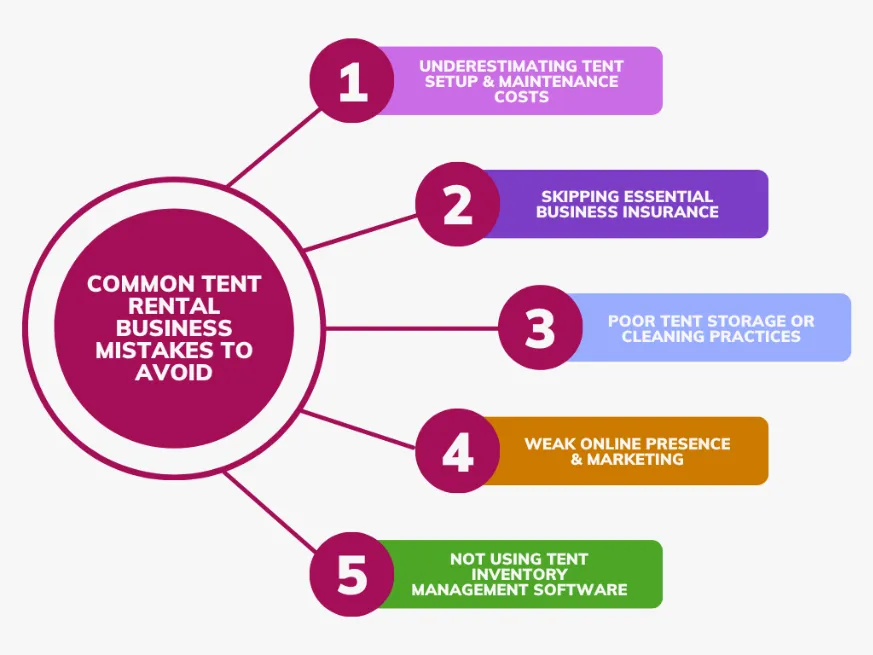
Many business owners rush things at the start and overspend. They underestimate how much it costs to get started and keep things running, which can use up cash fast and make it hard to grow later.
Another common pitfall is skipping insurance. One bad day turns into a major financial setback.
Similarly, owners also forget about proper storage and cleaning. This leads to equipment wearing out quickly, causing things like damaged tents, mold, and unhappy customers.
Not having a good online presence is another issue. If people can’t find you online, they won’t book with you.
Sticking to manual methods can also hold you back. Without a dedicated rental software to handle inventory, scheduling, and routes, mistakes happen and cause delays. Fortunately, you can avoid these problems with the right tools and systems.
Like other rental business ideas, you can make a profit by offering great experiences, good quality, and steady marketing.
Conclusion
Well, that’s the end of our guide on how to start a tent rental business! We’ve covered everything from planning to growing, so you’re ready to get started without the guesswork.
Now it’s time to take action. Clients want someone reliable, organized, and ready for anything. Build solid systems, and you’ll stand out in no time. Yes, this market is busy, but there’s always room for someone who plays the long game.
So, start now! Outline your plan, grab your first set of gear, and put your brand out there. The sooner you start, the sooner you’ll be booking events. Let’s make it happen!
FAQs
A tent rental business can be profitable, with margins of 30-45%. Success comes from steady event demand, good marketing, and smooth operations. Profit grows by scaling inventory and adding services like event setup or accessories.
Starting a tent rental business typically costs between $40,000 and $100,000. Key expenses include tents, trailers, transportation, and installation equipment. The ROI, typically, can be seen within 12-24 months, depending on local demand, competition, pricing, and operational efficiency.