


Thinking about starting a skid steer rental business but unsure where to begin? You probably have questions about equipment, costs, rental rates, and how to attract customers without overspending on advertising, right?
The opportunity is growing fast. The global skid steer loader market reached about USD 10.28 billion in 2025 and is expected to climb to USD 15.21 billion by 2034. This is because more contractors, landscapers, and farmers prefer renting over buying.
Don't worry, you don't have to sort everything out on your own. This guide will walk you through everything from business planning and equipment selection to pricing and marketing. By the end, you'll know what it takes to build a successful business. Let's get started.
What Is a Skid Steer Rental Business?
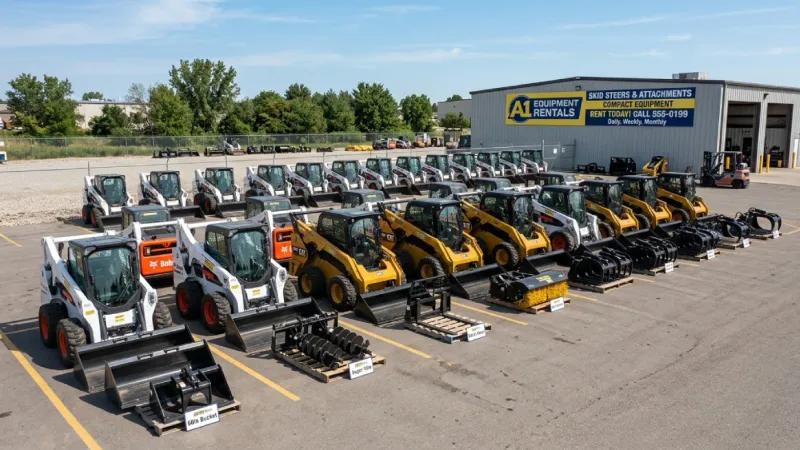
A skid steer rental business is an enterprise that provides customers with temporary access to skid steer loaders and attachments without the high upfront cost of equipment ownership. These businesses buy, service, and rent out equipment to various industries, making money from rental fees, delivery, and related charges.
This model allows construction, landscaping, and agricultural businesses to use machinery only when needed. Instead of buying, storing, and insuring equipment, customers can access a well-maintained fleet for specific jobs and pay only for the time they use it.
How Skid Steer Rentals Work
So, how do you run a skid steer rental business? It’s more than just owning equipment. Let’s break it down!
First, you'll need to build your fleet. This includes purchasing and maintaining skid steers, trailers, and various attachments for different jobs. Keeping your machines in top shape is how you ensure they are always ready to earn for you.
Next, you set your rental terms. You can offer flexible pricing and rental durations, from a few hours to several weeks. You’ll find that tracked loaders often fetch higher rates because they can handle trickier terrain.
Then comes logistics! Offering delivery and pickup is a valuable service that adds convenience for your customers and another revenue stream for you.
Finally, attachments like augers and grapple buckets can be big upsell opportunities. They offer an affordable way to increase the value of every rental while helping customers accomplish more with a single machine.
Typical Customers for Skid Steer Rentals
Skid steers are one of the most versatile machines you can rent out and a top choice for a wide range of customers.
For instance, fence contractors often rent them with auger attachments to quickly dig post holes for any size project, from residential to commercial. This saves them time and labor.
Similarly, landscaping companies use these machines for everything from grading and site prep to moving materials. The ability to switch between attachments like grapple buckets and brush cutters makes a single skid steer incredibly useful for them.
You'll also find construction contractors and utility crews relying on skid steers for tasks like demolition support, trenching, and working in tight spaces where larger equipment won't fit.
Even farmers and homeowners rent them for seasonal projects, property cleanup, and backyard upgrades.
Renting gives them access to powerful equipment without the high cost of buying and this makes it a smart choice for many jobs.
Why Skid Steer and Auger Rentals Are High-Profit Equipment Assets
Not all rental equipment offers the same return on investment. Skid steers are versatile and profitable due to high demand across many industries. They become even more profitable with attachments, which boosts revenue without the cost of a new machine.
Revenue Potential Per Machine
A skid steer's revenue largely depends on its rental rate and how often it's used. Let's say you charge a $300 daily rental rate and can rent it out for about 20 workable rental days per month.
Renting out a machine consistently helps you make more revenue and cover its ownership costs faster.
[INSERT CUSTOM HTML CALCULATOR BLOCK HERE]
Example ROI Calculation
Consider a used skid steer purchased for $20,000.
If the machine rents for $300 per day and is utilized for 120 days per year, annual gross revenue would be the following:
120 days × $300 = $36,000
A simplified payback calculation would be:
$20,000 ÷ $36,000 = 0.56 years
This means the purchase price could theoretically be recovered in less than one year of gross revenue. However, actual profitability depends on maintenance, repairs, insurance, transportation, storage, financing, and downtime costs.
Due to these extra costs, it's better to judge profitability by the net profit, not just the gross rental income.
Profit Margin Analysis of Skid Steers & Auger Attachments
Profit margins can change a lot depending on your market and business setup. Smaller businesses often have lower profit margins because their fixed costs are divided among fewer rentals.
In many rental businesses, net profit margins usually fall between 15% and 35%. Well-managed fleets with strong utilization and efficient maintenance programs may achieve higher returns.
However, actual profitability depends on factors like equipment utilization, rental rates, maintenance costs, market demand, and overall business efficiency.
Attachments are a great way to boost profits. They cost less than a full machine but add extra value to each rental.
Why Attachments Increase Fleet Revenue
Attachments are a fantastic way to boost your fleet's revenue. By letting a single skid steer do multiple jobs, you make it more valuable to more customers.
Instead of only renting the machine, you can also rent attachments. This boosts your income without needing to purchase more equipment.
For example, augers are used for drilling holes for fence posts, foundations, trees, signs, and utility projects. They are popular among contractors, landscapers, and property owners. This makes augers one of the most frequently rented skid steer attachments.
Trenchers are for digging narrow channels for things like irrigation or utility lines.
Grapple buckets are perfect for material handling and cleanup jobs like debris removal, storm cleanup, and land clearing, while pallet forks turn your skid steer into a material handler. Contractors frequently use them to move pallets, construction materials, and equipment around job sites.
Brush cutters are popular for vegetation management, land clearing, roadside maintenance, and property development projects.
By renting out these attachments, you can get more out of your existing machines and increase your revenue.
Utilization Benchmarks for Rental Businesses
When it comes to equipment rental, utilization is one of the most important metrics you'll want to track. Higher utilization means your ownership costs are spread over more rental days, which helps boost your rental return on investment and improve overall profitability.
The following example assumes:
- Daily rental rate: $300
- 20 rentable days per month
- 240 rentable days per year
| Utilization Rate | Rental Days/Month | Monthly Revenue | Annual Revenue |
|---|---|---|---|
| 20% | 4 days | $1,200 | $14,400 |
| 40% | 8 days | $2,400 | $28,800 |
| 60% | 12 days | $3,600 | $43,200 |
| 80% | 16 days | $4,800 | $57,600 |
Disclaimer: Please note that all figures, including rental rates, revenue, ROI, utilization, costs, and profits, are for illustrative purposes only. Actual results vary based on market conditions, location, equipment age, demand, competition, maintenance expenses, and business operations. Always consult a qualified financial, tax, or equipment rental professional before making investment decisions.
How to Start a Skid Steer Rental Business in 9 Steps
Many rental providers prefer equipment in the 1,800–3,000 lb range because it offers a practical blend of capability, cost, and customer interest.
Step 1: Build Your Business Plan Before Purchasing Equipment
Buying equipment without a business plan can cause costly issues. Before you get a skid steer, know your customers, competitor pricing, and how much money you need to start with. A good plan helps you make smarter choices and reduces risk.
Define Your Target Market
To build a successful rental business, you first need to know who your customers are. Tools like Google Trends or Keyword Planner can show you where demand is highest by tracking searches like "skid steer rental near me."
Different customer groups, from homeowners to contractors, have unique needs. Residential customers might rent for a weekend landscaping project, while commercial contractors could need a skid steer for weeks.
Understanding these differences helps you customize your services and pricing.
Offering the right attachments, like augers or pallet forks, can make a huge difference. It not only meets specific project needs but also significantly boosts your revenue per rental.
By offering equipment that's both versatile and reliable, you'll gain loyal customers who keep coming back and drive long-term growth.
Analyze Local Competition
Before diving in, let's take a look at the rental market in your area. Conducting a business analysis of skid steer rental companies in your target area is a smart first move.
Check out their pricing (hourly, daily, weekly) and the types of services they offer. This will give you a clear picture of what customers expect and where your business can shine.
Daily rates often fall between $200 and $550, while weekly rentals can range from $800 to $1,500. See if competitors bundle attachments or charge extra. Also, note their delivery fees, which can be a nice revenue booster.
Don't forget to look at attachment rental prices for items like augers and grapple buckets. Understanding what others are doing helps you set competitive prices and create attractive packages for your future customers.
Calculate Startup Costs
Once you understand the market, it's time to crunch the numbers. Your startup costs will depend on your equipment, location, and operating model. The table below outlines common expenses for a single-machine rental business to help you get started with your equipment rental business.
| Expense Category | Estimated Cost |
|---|---|
| Used Skid Steer | $20,000 to $60,000 |
| Auger Attachment | $1,500 to $4,000 |
| Equipment Trailer | $3,000 to $10,500 |
| Insurance | $2,000 to $10,000+ annually |
| Maintenance Fund | $2,000 to $10,000 |
| Rental Software | $50 to $300+ per month |
These are general estimates. Other costs include licenses, storage, GPS tracking, marketing, and legal help. A good budget from the start helps avoid money problems and builds a stronger business for the future.
Step 2: Choose the Right Equipment for Your Rental Fleet
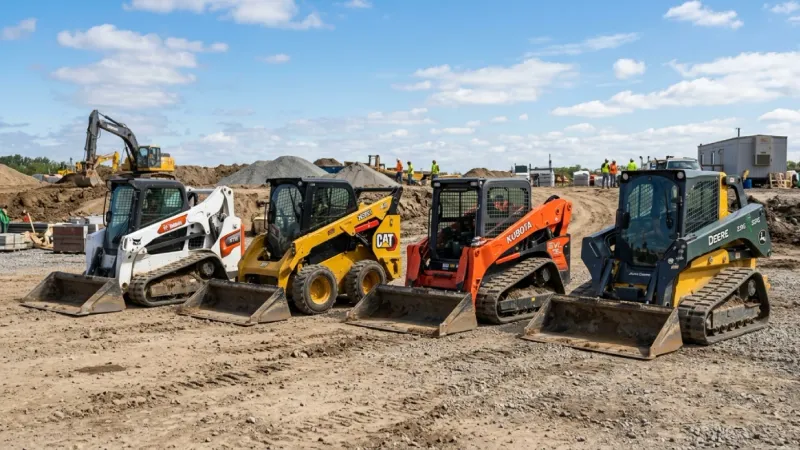
The equipment you choose affects your profits, repair costs, and happy customers. Versatile machines with various attachments appeal to more renters and will help you make more money from the start.
Comparing Popular Skid Steer Brands
Many brands are popular in the rental market because they're reliable, offer good dealer support, work with many attachments, and have high resale value. Knowing what each brand does best will help you choose which skid steer to buy.
| Brand | Typical HP Range | Typical Lift Capacity (ROC) |
|---|---|---|
| Bobcat | 25–105 HP | 700–4,600+ lbs |
| CAT | 67–111 HP | 1,550–4,600 lbs |
| Kubota | 25–96 HP | 700–3,650 lbs |
| John Deere | 65–118 HP | 1,750–4,000 lbs |
| Case | 60–90+ HP | 1,700–4,200 lbs |
| New Holland | 49–90 HP | 1,300–4,000 lbs |
| Gehl | 46–120 HP | 1,350–4,200 lbs |
| Manitou | 68–120 HP | 2,000–4,600 lbs |
| JCB | 74–111 HP | 2,100–4,000 lbs |
For many rental operators, machines with rated operating capacities between 1,800 and 3,000 lbs offer a good balance of versatility, cost, and customer demand.
New vs. Used Equipment
One of the biggest decisions new operators face is whether to purchase new or used equipment. Both options have their pros and cons. The best choice for you will depend on your budget, business goals, and how much risk you're willing to take.
| Factor | New Equipment | Used Equipment |
|---|---|---|
| Purchase Price | Higher | Lower |
| Warranty Coverage | Full manufacturer warranty | Limited or none |
| Maintenance Costs | Typically lower initially | Potentially higher |
| Reliability | Generally high reliability | Depends on age, usage, and maintenance history |
| Depreciation | Most depreciation occurs during the first few years | Typically lower and slower |
| Financing Options | Widely available | Varies by lender and equipment age |
| Startup Capital Required | Higher | Lower |
New equipment comes with a warranty, costs less to repair, and is more reliable. However, it has a higher initial cost and its value drops faster in the first few years.
Used equipment is cheaper to start with and can make you profitable sooner. Many rental businesses start with used machines and buy new ones as their business grows.
Best Auger Sizes for Rental Fleets
Augers are a must-have for any rental fleet because they're useful for many different jobs. But which sizes should you offer?
Six-inch augers are your go-to for smaller jobs like fence posts and deck supports. They're popular with homeowners and fencing contractors.
For more flexibility, nine-inch augers are great for planting trees, installing larger posts, and handling general landscaping work. They serve both residential and light commercial applications.
Ready for bigger projects? Twelve-inch augers are widely used for commercial fencing, utility installations, and larger footing applications. For larger-diameter holes required in projects such as pole barns, deck piers, and structural footings, the eighteen-inch auger is a common choice.
For tough, rocky ground, offer a specialized rock auger. It's designed for difficult soil conditions that standard bits can't handle.
Offering a variety of these sizes ensures you have the right tool for nearly any job that comes your way.
Most Requested Attachments to Add Later
Once your fleet starts generating revenue, you can consider adding more attachments to increase your income. A single skid steer can handle multiple jobs with the right attachments, so you won't need to buy new machines.
Some of the most requested attachments include grapple buckets for clearing land, trenchers for digging narrow channels, and versatile pallet forks for moving materials.
Brush cutters are perfect for controlling vegetation, while snow blowers can provide a valuable income stream during winter.
Each of these attachments appeals to different customers, from landscapers to construction crews.
By expanding your collection, you can take on more specialized jobs, which often means higher rental rates and a better return on your investment.
Step 3: Source Equipment and Establish Maintenance Operations
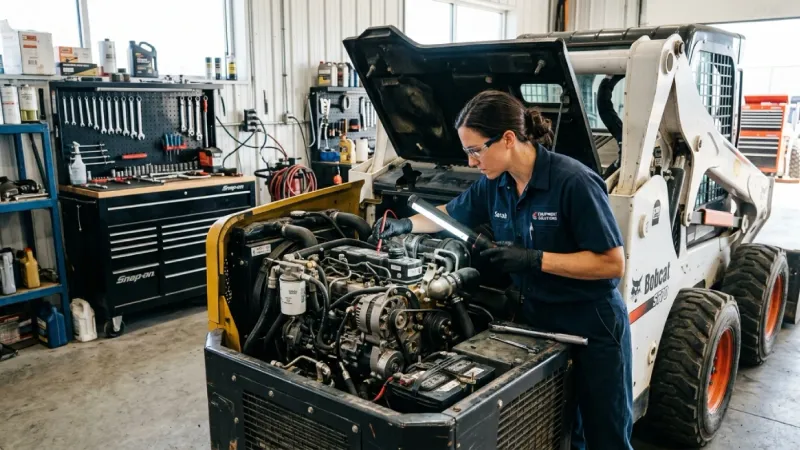
To run a profitable skid steer rental business, you need more than just equipment. Your sourcing, transport, and maintenance systems directly impact utilization, costs, and returns. Get these right, and you'll keep your equipment running and your customers happy.
Where to Buy Rental-Ready Equipment
Ready to build your fleet? Where you buy your equipment matters. To get the best value, it's smart to explore a few options.
Dealer auctions can be a great place to find competitive pricing on newer machines. Just be sure to inspect them thoroughly, as warranty coverage may be limited or unavailable depending on the sale terms.
You can also browse online marketplaces like Equipment Trader, which allow you to compare thousands of listings from your desk.
Another valuable source is rental fleet liquidations, where you may find equipment that has been professionally maintained and supported by documented service records.
Of course, your local dealership is often one of the safest options. Many dealers offer financing, warranty support, and certified pre-owned equipment, which can be especially beneficial for businesses that are just getting started.
Balancing purchase price with equipment condition, service history, financing options, and long-term support will help you make the best choice for your business.
Trailer Requirements for Equipment Transport
Once you've purchased your equipment, you need a plan for transportation. Safely moving your new asset is essential to protect your investment, serve customers effectively, and comply with applicable regulations.
Start by considering the weight you'll be hauling.
Most skid steers weigh between approximately 5,000 and 12,000 pounds, depending on their size and configuration.
Because of this, many rental businesses utilize trailers rated between 14,000 and 20,000 pounds GVWR, although the appropriate trailer capacity will depend on the specific machine, attachments, and towing vehicle.
Always calculate the total transported weight, including the skid steer, attachments, fuel, tools, and any additional cargo. This ensures both the trailer and tow vehicle are properly rated for the load.
Transportation requirements can vary by state and jurisdiction. Depending on your combined vehicle weight ratings and operating conditions, you may need commercial registration, additional insurance coverage, or drivers who meet specific licensing requirements.
Don't forget about proper load securement. Use appropriately rated chains, binders, and tie-down points to secure equipment safely during transport and help maintain compliance with applicable transportation regulations.
Understanding Operating Costs
When starting a skid steer rental business, it's easy to focus on the purchase price. But don't forget operating expenses. Knowing these costs helps you set the right prices and avoid surprises.
Your biggest expense will likely be diesel fuel. How much you use depends on the machine's size, how hard it's working, and the attachments being used. A common practice is to have customers return the equipment with a full tank or pay a refueling fee.
Next is hydraulic fluid, which powers the loader. You'll need to check and change it regularly to avoid expensive repairs and keep your equipment available for rent.
Regular filter replacements for the engine, fuel, and air systems are also important. This simple task can save you money on repairs and help your equipment last longer.
Finally, don't forget to include other costs like tires, tracks, transport, insurance, and depreciation. Keeping track of these expenses will help you set competitive rental prices while still making a profit.
Fleet Maintenance and Inspection Procedures
Maintenance is how you keep your fleet ready, avoid unexpected repairs, and keep customers returning. A consistent inspection schedule protects your equipment and ensures it's safe and productive year-round as your business grows.
Start with quick daily checks before each rental: fluids, filters, tires, and attachments. This is your first defense against downtime.
Then, perform more detailed weekly inspections to spot wear and tear early, cleaning machines to reveal any hidden issues.
Don't forget preventive maintenance based on operating hours, as recommended by the manufacturer. Following these intervals for oil changes and major servicing is far cheaper than dealing with emergency repairs.
To tie it all together, using a management system like RentMy can help you track everything from service history to automated reminders. This keeps your fleet in top shape, boosts utilization, and lets you focus on growing your business.
Step 4: Build a Profitable Rental Pricing Strategy

Your rental rates affect more than just your income; they also impact how often your equipment is used and your overall success. A good pricing plan should cover all your costs while still providing great value to your customers.
How Much Should You Charge for Skid Steer Rentals?
There is no universal rental rate that works in every market. Your pricing should reflect machine size, equipment condition, local competition, seasonal demand, included services, and customer expectations.
Many successful operators avoid competing solely on price. Contractors and property owners often value dependable equipment, fast delivery, responsive support, and equipment availability more than finding the lowest advertised rate.
A good pricing strategy starts with knowing your costs. Once you've covered those, you can focus on getting the most use out of your equipment and earning more from each rental by offering extra services and attachments.
Average Skid Steer Rental Rates
Rental rates depend on the region, machine size, and local demand. Compact track loaders often cost more to rent than wheeled skid steers because they can do more and cost more to own.
| Rental Term | Typical Rate Range* |
|---|---|
| Hourly | $50–$110 |
| Daily | $200–$550 |
| Weekly | $800–$2,000 |
| Monthly | $2,500–$5,000+ |
*Actual rental rates vary by market, machine size, attachments, and seasonal demand.
Longer rentals often have a lower daily rate. This encourages renters to keep the equipment for extended periods, which is better for both the contractor and the rental company.
Attachment Pricing Examples
Attachments often produce strong returns because they require far less capital than purchasing another machine. They also increase the value of each rental transaction.
| Attachment | Typical Daily Rate Range* |
|---|---|
| Auger | $85–$195 |
| Trencher | $130–$175 |
| Pallet Forks | $50–$120 |
| Grapple Bucket | $75–$135 |
*Rates vary by attachment size, market conditions, equipment availability, and rental duration.
Local demand, seasonal changes, and customer types can all affect attachment pricing. You can track how often each attachment is used to see which one makes the strongest returns.
Additional Revenue Charges
Looking beyond just equipment rates, many businesses boost their revenue with extra services that also help you out.
For instance, if you don’t have a trailer, you can opt for a delivery and pickup service to get the equipment straight to your job site. This not only adds convenience for you but also creates an additional revenue stream for the business.
Similarly, you might see fuel charges if you return the equipment with less fuel than it started with. Cleaning fees can also apply when machines come back dirty, covering the labor needed to get them ready for the next rental.
Lastly, damage waiver fees are there to cover repair costs if the equipment gets damaged. Listing all these possible charges in the rental agreement from the beginning makes things clear and avoids surprises for everyone.
Setting Up Pricing Structures
With RentMy, you can easily set hourly, daily, and weekly rental prices for your equipment, like skid steers and augers. No more complicated spreadsheets, just simple, flexible pricing for your customers.
Hourly, Daily, and Weekly Pricing
To get started, open the product from your inventory list and navigate to the Pricing tab. From there, select the Standard Pricing Controller, which allows you to configure hourly, daily, weekly, and monthly rental rates from a single screen.
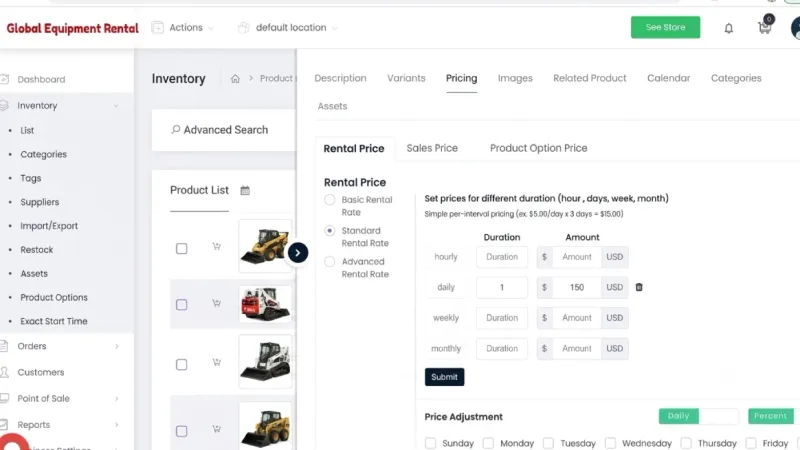
You can customize the minimum rental period for each pricing tier. For example, if you want customers to book a skid steer for at least three days, simply adjust the minimum term field and save the changes. RentMy automatically applies the correct pricing based on the rental duration selected by the customer.
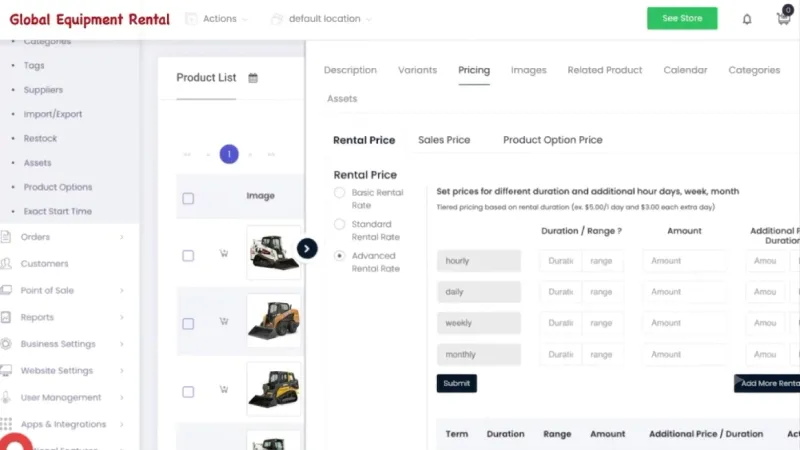
If you need more flexibility, the Advanced Pricing Controller lets you create pricing tiers. This means you can charge one rate for the first day and a different rate for additional days. It's a great way to encourage longer rentals.
Attachment Bundles
Attachment bundles are one of the easiest ways to increase revenue from every skid steer rental. Instead of requiring customers to request attachments separately, RentMy allows you to configure pricing options directly within the product setup.
You can use the Product Options Pricing tool to set option-based fees during the checkout process. The system automatically adds the correct amount to the order total when a customer chooses an upgraded option.
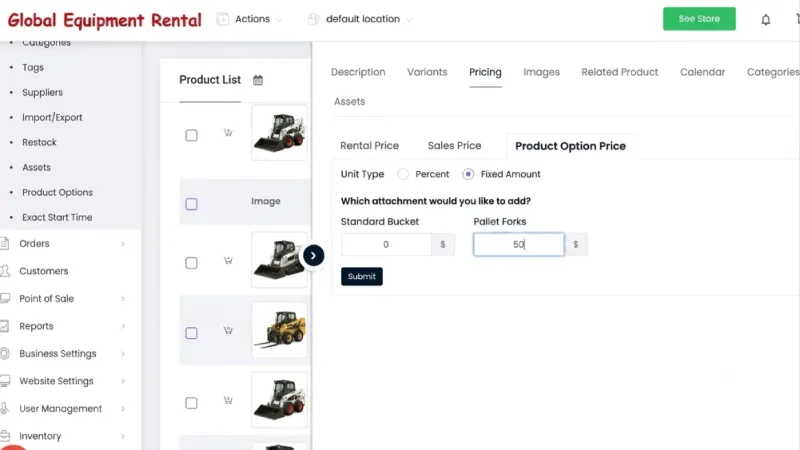
For example, a rental company can create equipment packages that include augers, trenchers, grapple buckets, or pallet forks and assign different pricing levels to each selection. Once configured, RentMy calculates the final rental amount automatically based on the customer's choices.
This approach helps increase your average order value while simplifying the booking process for renters who need multiple tools for a project.
Seasonal Pricing Rules
Skid-steer demand changes with the seasons, from spring landscaping to summer construction. This means you might need to adjust your prices throughout the year to match demand.
RentMy's Price Adjustment feature allows you to increase or decrease rental pricing based on specific rental start days. You can apply either fixed-dollar adjustments or percentage-based changes depending on your pricing strategy.
For example, if weekend demand is consistently higher, you can configure the system to charge more for rentals beginning on Saturdays and Sundays. Likewise, you can offer discounts during slower periods by entering a negative adjustment value.
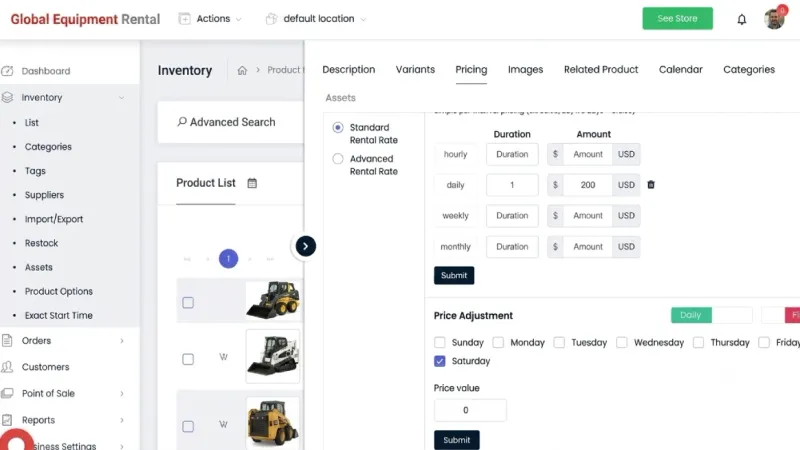
Once activated, RentMy automatically handles the Price Adjustment Feature at checkout. This removes manual work and keeps pricing consistent, so you don't have to worry about it.
Minimum Rental Periods
Minimum rental periods help protect profitability by ensuring equipment generates enough revenue to cover transportation, administration, and operating costs.
RentMy allows you to define minimum rental terms directly within the Standard Pricing Controller. While setting daily, weekly, or monthly rates, simply enter the minimum duration required for each pricing category.
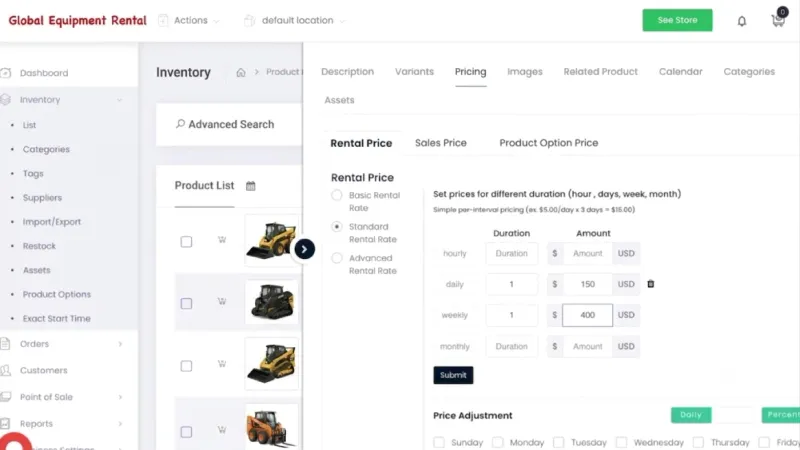
For instance, if you want a skid steer to be available only for rentals of three days or longer, you can set a three-day minimum requirement. The platform then uses those rules when customers select rental dates online.
This automation helps prevent short rentals that may not be financially worthwhile while creating a more consistent booking experience.
Long-Term Rental Discounts
Long-term rentals often produce stronger utilization rates and more predictable revenue. RentMy supports this strategy through its advanced pricing capabilities.
Inside the Advanced Pricing Controller, you can create multiple pricing tiers that reward customers for longer rental commitments. For example, you might charge a standard rate for the first rental day and automatically apply lower rates to additional days.
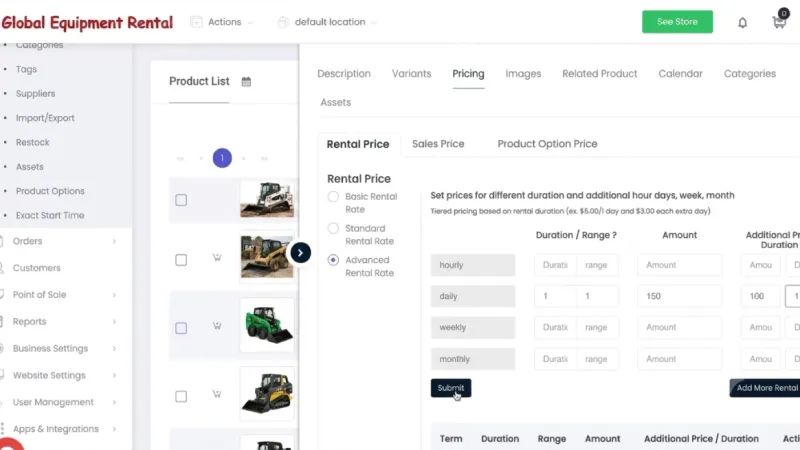
RentMy calculates pricing at checkout, so customers see their savings for longer bookings right away. This encourages them to rent equipment for extended periods while reducing turnover between rentals.
The result is improved utilization, fewer delivery trips, and more stable recurring revenue.
Upselling Attachments During Checkout
The checkout stage presents a valuable opportunity to increase rental revenue without adding another machine to your fleet.
RentMy's Product Options Pricing feature allows businesses to present additional equipment choices during the booking process. Customers can select upgrades or add-ons, and the platform automatically adjusts the final rental price.
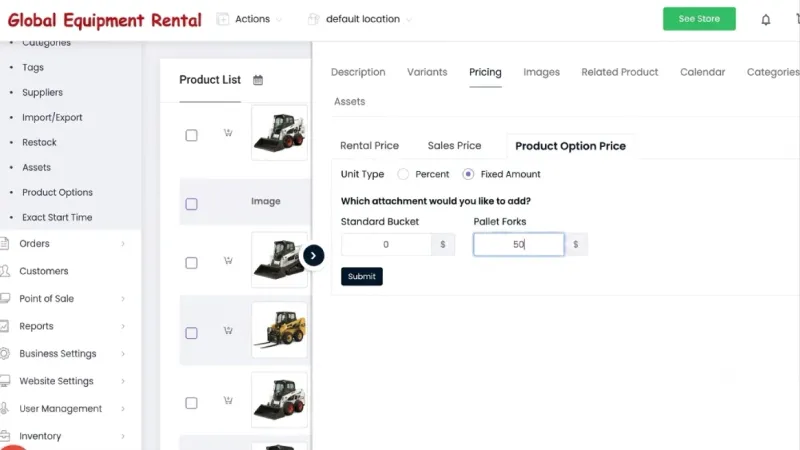
For skid steer rental businesses, this can be used to offer augers, trenchers, grapple buckets, pallet forks, brush cutters, and other attachments while customers are completing their reservation. Since the pricing is calculated automatically, renters can see the added cost instantly before finalizing the order.
This creates a smoother booking experience while helping increase the average value of every transaction.
Step 5: Protect Your Business with Insurance, Contracts, and Risk Management
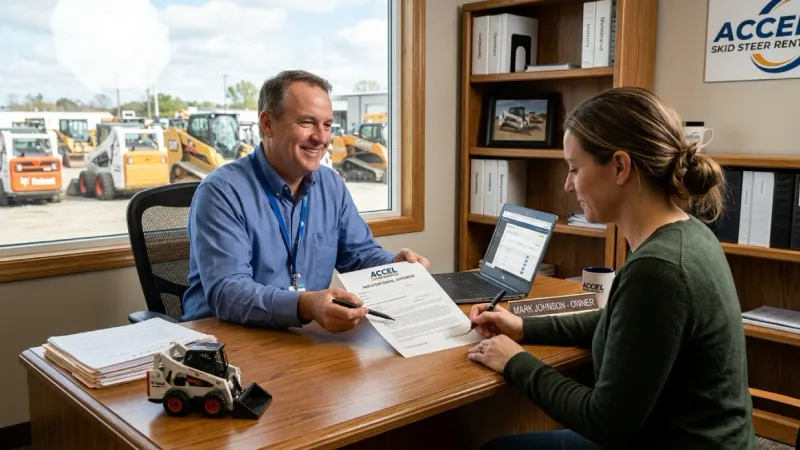
Owning rental equipment is only part of the equation. Protecting that investment is equally important if you want long-term profitability and fewer unexpected financial setbacks. A strong risk management system reduces disputes and creates a safer experience for you and your customers.
Common Risks in Equipment Rentals
Running a skid steer rental business means dealing with a few common risks. Since your equipment moves between different job sites and operators, things like damage, misuse, or even theft can happen.
Understanding these possibilities early helps you create smart policies to protect your business.
Equipment damage is a frequent challenge. Machines face rough terrain and varied operating conditions, which can lead to costly repairs and downtime.
Theft is another real concern, as skid steers are valuable assets often left on sites overnight. You can reduce this risk with GPS trackers and secure storage.
Finally, there's the risk of operator injuries or unauthorized use, which can create liability issues.
Clear rental agreements and usage policies help protect your business and customers. This makes sure everyone has a smooth rental experience.
Insurance Coverage You Need
Think of insurance for your rental business as your financial safety net. While your specific needs can vary, a few key policies work together to provide solid protection.
First, there's general liability insurance, which helps cover you if your equipment causes injuries or property damage at a job site.
Next, inland marine insurance is a must as it protects your gear while it’s being transported, stored off-site, or used by a customer.
You'll also need commercial auto insurance for your delivery trucks and trailers.
And don't forget equipment coverage (or property insurance) to protect machines at your facility from fire, theft, or storms.
As your business grows, you may also want to look into workers' compensation and umbrella liability insurance. Having the right mix of coverage will ensure you're prepared for anything.
Equipment Rental Agreements and Waivers
A strong rental agreement is your best defense. It clearly defines responsibilities and expectations, preventing issues before they start.
Your agreement should detail who is renting, what equipment they're using, the rental duration, and the costs involved. It's also smart to include specifics like delivery and pickup procedures, fuel policies, and the expected return condition.
Covering potential issues like late returns, damage responsibilities, or unauthorized use helps avoid misunderstandings. Many businesses also offer a damage waiver for extra protection against accidental damage.
You can make this process easier by using electronic agreements and digital signatures. This also keeps your records secure.
Before finalizing the contract, it's always a good idea to have a local lawyer review it to make sure everything is correct.
Customer Qualification Requirements
Renting your skid steer to qualified customers is the easiest way to reduce risk. Creating simple screening steps can help prevent issues like fraud, theft, or equipment damage right from the start.
Always begin by verifying a customer's identity. Ask for a valid government-issued photo ID and their current contact details.
For commercial clients, you might also request business documents and proof of insurance.
Next, consider their experience. While a special license isn't typically needed for a skid steer, a quick equipment orientation is a great idea. This helps customers get familiar with the controls, safety features, and how to use attachments before they head out.
For high-value rentals, you could also run a credit check or ask for references to ensure your equipment is in good hands.
Managing Security Deposits and Damage Protection
Security deposits and damage protection are great ways to protect your rental business. They reduce financial risks and encourage customers to return equipment in good shape.
You can hold a security deposit to cover potential costs like damage, late returns, or even extra cleaning. The amount can vary based on the equipment's value and rental duration.
A simple way to do this is with a pre-authorized hold on a customer’s credit card, which you can release once the equipment is returned safely.
Another option is to offer a damage waiver. Customers can opt for limited accidental damage protection for a small cost, which benefits them with added confidence and helps boost your revenue.
No matter which path you choose, always keep clear documentation. Take photos before and after each rental and keep detailed inspection reports. This practice is your best tool for managing claims and resolving any disputes fairly and professionally.
Software platforms such as RentMy simplify this process by storing inspection records, photos, maintenance history, customer information, and claims data in one location.
Step 6: Optimize Delivery, Pickup, and Fleet Logistics
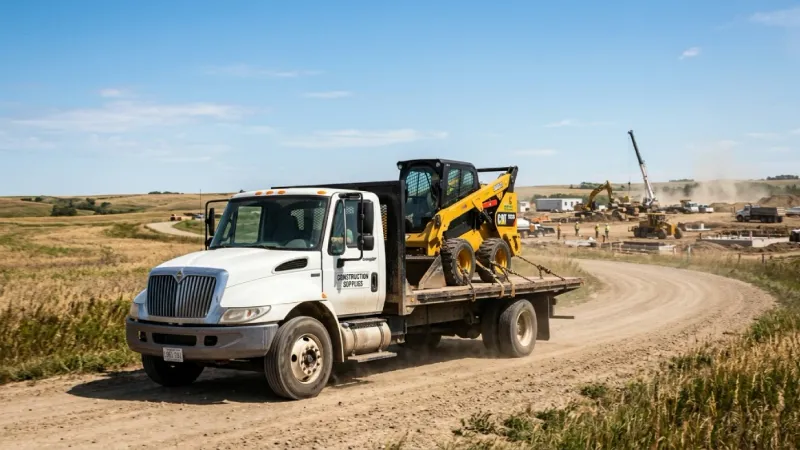
Efficiently managing your delivery, pickup, and fleet logistics is a smart move for your profitability. A well-organized system lowers operating costs and keeps customers happy with on-time equipment delivery.
As your business gets bigger, you can create delivery zones. This means setting one price for each area. It makes giving quotes faster and your prices clearer for customers.
Remember to account for all transportation costs, not just fuel. This includes labor, vehicle maintenance, and insurance, which all impact your profits.
Optimizing your delivery routes also makes a huge difference. Grouping deliveries and pickups in the same area saves both fuel and time.
You should also offer both delivery and self-pickup options. This gives customers more flexibility. Contractors might want to save money by picking up the equipment themselves, while others will pay for the convenience of delivery.
This flexibility can attract more customers, increase your bookings, and boost your revenue.
Step 7: Create an Online Booking Experience That Increases Utilization

Having a great fleet is just the start. Your customers also want a fast, convenient rental experience. The easier you make it to book your equipment, the more it will be out on rent instead of sitting idle.
An online booking system is now a standard expectation. It lets contractors and homeowners reserve equipment anytime, even outside your office hours. So, this helps you capture more business.
This digital approach even cuts down on admin work. It handles bookings, payments, and contracts in one place and uses real-time inventory updates to prevent double bookings.
An online booking system can also suggest compatible attachments during checkout. This not only increases your revenue but also helps your customers get everything they need.
Digital contracts make the process even smoother, as they allow secure online signatures.
RentMy combines these functions into one platform. From a single dashboard, you can manage bookings, track inventory, automate communications, collect payments, and schedule maintenance. This reduces double bookings, improves response times, and keeps equipment generating revenue.
Step 8: Market Your Skid Steer Rental Business
Marketing your skid steer rental business helps you connect with customers who need your equipment. A great place to start is with a professional, easy-to-use website.
Since over 60% of global internet users browse on mobile, a mobile-friendly site with online booking and clear pricing is essential. Platforms like RentMy can help you build SEO-friendly websites instantly without any coding.
To attract local customers, focus on your online presence. A complete Google Business Profile will get you noticed on Google Maps and in local searches.
Encourage satisfied customers to leave reviews, as positive ratings build trust and improve your local ranking. Creating location-specific service pages on your website for the towns or neighborhoods you serve can also significantly boost your visibility.
Also, consider paid search advertising to reach customers who are ready to rent right now. Campaigns targeting keywords like "skid steer rental rates" can connect you with customers who are ready to rent right now.
Don’t forget the power of content! Writing helpful articles about rental rates or project ideas positions you as an expert and brings in traffic over time.
Building relationships with local businesses, like contractors, can also bring in more customers. Combining these strategies will keep your skid steers booked and your business growing.
Step 9: Scale from One Machine to a Multi-Unit Fleet
Growing your business is an exciting next step, but it requires smart choices, not just buying more equipment. So, how do you know when it's the right time to expand?
A great place to start is by watching your equipment's utilization rate. If your skid steer is consistently booked out (think 60-70% utilization), it's a strong sign you're ready for another machine.
Before you invest in a new loader, consider expanding your attachment inventory first.
Tools like pallet forks, grapple buckets, or augers can make your current machine more versatile. This allows you to attract more customers and increase your income without buying a whole new skid steer.
When it's time to grow your business, use data to make smart choices. Modern equipment rental software can track utilization, revenue per machine, and maintenance costs. This information helps you decide when to expand.
As your business grows, you'll also need to hire people like drivers and mechanics to keep things running smoothly and customers happy.
Common Mistakes New Skid Steer Rental Businesses Make
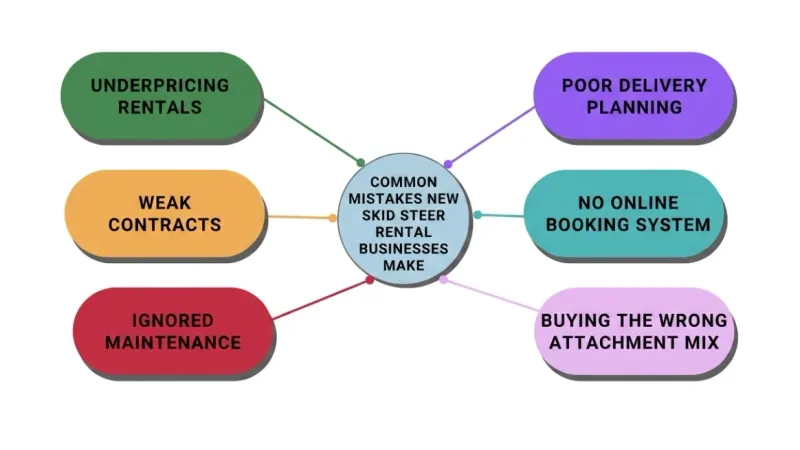
Starting a rental business comes with its own set of challenges, but avoiding common errors can set you up for success. Let's explore some frequent mistakes that can hurt your profits and learn how to build a stronger business from day one.
Setting prices too low might attract customers initially, but it can undervalue your service and hurt your profits. Instead, focus on providing a reliable service that customers will value more.
Speaking of reliability, don't forget routine maintenance! Keeping your equipment in top shape prevents expensive breakdowns and keeps customers happy.
Clear rental agreements are also a must-have, as they prevent confusion and protect your business. To make things even smoother, smart delivery planning is key to avoiding delays and extra costs.
Failing to have an online booking system is a missed opportunity. Modern customers expect the convenience of booking online at any time, and businesses relying only on phone calls may lose out.
Finally, buying the wrong attachment mix can be a costly mistake. Purchasing equipment without understanding local demand can leave expensive inventory sitting unused. Focus on attachments that are frequently rented to maximize your return on investment.
Conclusion
That's a wrap on our guide to building a successful skid steer rental business. We covered everything from business plans to marketing and expansion. Hopefully, these steps give you a great starting point for your new venture.
The difference between an average and a profitable rental business is consistency. Maintained equipment, smart pricing, and great customer relationships can turn one machine into a reliable income source.
Every successful rental business starts with a single step. Whether you're doing research or buying your first skid steer, create systems for long-term growth. Begin small, pay attention to your data, and always look for new ways to improve your customer service.
FAQs
Is Renting Out a Skid Steer Profitable?
Yes, it can be profitable when utilization stays strong and pricing covers operating costs. Many rental businesses target utilization rates above 50%. Profitability depends on equipment costs, maintenance, local demand, attachment rentals, and efficient fleet management.
What Is the Average Price to Rent a Skid Steer?
Rates vary by machine size, location, and rental duration. Typical rates range from $200–$550 per day, $800–$2,000 per week, and $2,500–$5,000+ per month. Compact track loaders often command higher rates than wheeled skid steers.
How Much Money Can a Skid Steer Rental Business Make?
Revenue depends on fleet size, pricing, and utilization. A single machine rented consistently can generate tens of thousands of dollars annually. Multi-unit fleets can produce substantially higher revenue when supported by strong demand and efficient operations.
Is a Skid Steer Business Worth It?
It can be a worthwhile investment if demand exists in your market and equipment remains actively rented. Businesses that focus on maintenance, utilization tracking, customer service, and attachment upsells often achieve stronger returns than operators who rely on equipment rentals alone.
How Long Does a Rental Skid Steer Typically Last?
With proper maintenance, many skid steers remain productive for 5,000–10,000 operating hours or more. Regular inspections, timely repairs, and manufacturer-recommended service schedules help extend equipment lifespan and resale value.