

Explore the Content
- What Is a Camper Rental Business?
- Is a Camper Rental Business Profitable?
- Camper Rental Industry Overview: Trends, Demand & Growth
- Camper Van Rental Business vs RV Rental Business
- How to Start a Camper Rental Business in 10 Steps
- Common Camper Rental Mistakes to Avoid
- Tools You'll Need to Run Your Camper Rental Business Smoothly
- Conclusion
- FAQs
Ready to learn how to start a camper rental business? You're in the right place. We'll cover everything from costs and popular vans to turning your idea into a steady stream of income.
The timing couldn't be better. More travelers are choosing flexible road trips over hotels, and the global campervan rental market is set to hit USD 362.5 million by 2034. That's a lot of demand waiting for you.
This guide will walk you through every step with clear, practical tips you can use right away. So, let's get started.
What Is a Camper Rental Business?

A camper rental business is a service that provides customers with temporary use of recreational vehicles (RVs) or camper vans for travel. These vehicles offer built-in amenities like beds and kitchens, allowing travelers to explore on their own schedule without needing traditional lodging.
While people often use "camper," "RV," and "motorhome" to mean the same thing, they're actually different. RVs include everything from compact camper vans to full-size motorhomes, which are truck-based and offer more living space and features.
Types of Camper Rental Business Models
When starting a van rental business, choosing the right business model is important as it shapes your costs and profits.
A popular entry point is the peer-to-peer model, where you list your camper on a platform like Airbnb for vehicles. It's a simple way to begin a camper van business, as platforms handle payments and insurance for a commission.
Alternatively, the fleet ownership model involves owning multiple vehicles and managing bookings through your own website. This RV rental model offers full control and higher profit margins once established.
Finally, a hybrid approach combines both methods, listing on third-party sites while also taking direct bookings. This balances wide exposure with direct control and helps you grow your business without relying on a single channel.
Is a Camper Rental Business Profitable?

Yes, with proper management, a camper rental business can be profitable. Success depends on keeping your vehicles rented (occupancy rates), managing seasonal demand, and controlling your costs.
Profit margins for camper rentals can typically range from 35% to 50% (gross) and 20% to 30% (net). You can expect a return on your investment (ROI) within 2 to 4 years, though a 1 to 3-year window can be possible with lower overhead costs.
Daily rental rates for Class B campervans average $220–$238. At 50% occupancy, you could see monthly profits of around $3,300.
However, remember to factor in annual expenses. Key costs include maintenance (about $680/year), insurance (around $383/year for a trailer), and storage (approximately $795/year). These costs will affect your overall profitability.
Disclaimer: These figures are illustrative examples based on assumed rates and occupancy levels. Performance will depend heavily on your market, repair costs, idle time, and how strong demand is. Always conduct proper market research and consult with a financial advisor prior to investing.
Camper Rental Profitability Table
| RV Type | Avg Daily Rate | Weekly Rate | Est. Monthly Profit (at Avg Occupancy) |
|---|---|---|---|
| Class B Campervan | $220–$238 | $1,666 | $3,300 (50%) |
| Travel Trailer | $115–$120 | $812 | $1,500 (40%) |
| Pop-Up Camper | $90–$100 | $637 | $1,200 (45%) |
Disclaimer: These figures are estimates based on average industry benchmarks. Monthly profits vary significantly with seasonality, occupancy, and market conditions. The table should be interpreted as a baseline guide, not a guarantee of year-round performance or financial outcomes.
Quick Camper Rental Profit Calculator
Want a rough idea of your earnings? Use this tool to quickly calculate your potential camper rental profits.
Calculator Inputs
| Timeline | Revenue | Op. Profit |
|---|---|---|
| Monthly | $390 | $380 |
| Year 1 | $4,680 | $4,560 |
| Lifetime | $14,040 | $12,480 |
Camper Van Rental Startup Cost Breakdown
Before buying vehicles, you need to set a clear budget. The good news is you don't need a massive investment to get started.
A low-budget setup can cost between $8,000 and $20,000. This typically involves buying a used van, performing a basic conversion, and securing minimal insurance. This is a smart way to test demand before committing to bigger investments.
A mid-range setup usually falls between $30,000 and $70,000. This budget allows for 1–3 reliable vans, better conversions, camper rental business insurance, management tools etc. At this level, you can run a small but steady operation.
If you're targeting a higher-end setup, expect to invest at least $120,000 or more. This includes multiple vehicles, professional conversions, management tools, and staff support.
No matter your budget, start to learn and grow based on real demand.
Camper Van Startup Cost Overview
| Category | Low Budget ($8K–$20K) | Mid-Range ($30K–$70K) | Premium Fleet ($120K+) |
|---|---|---|---|
| Vehicles | 1 used van ($5K–$12K) | 1–3 reliable vans ($25K–$50K each) | 3–5 vans ($120K–$300K+ total) |
| Conversion | Basic setup ($1K–$3K) | Upgrades ($5K–$20K) | Professional conversions & branding |
| Insurance | $1K–$2K/year | $2K–$4K/year | Higher coverage (varies by fleet size) |
| Website/Software | Minimal or none | $1K–$3K | Advanced tools like RentMy |
| Marketing | $500–$1K | $3K–$5K | Scaled campaigns + branding |
| Storage | Minimal / home parking | $1K–$3K | Dedicated storage or yard |
| Staff | None | Optional | Part-time/full-time staff |
| Other Costs | $300–$1K (legal, registration) | Included above | Fleet tools, GPS, admin systems |
| Best For | Testing with 1 vehicle | Small business (1–3 vans) | Scaling a professional rental operation |
| Profit Potential | Moderate, higher risk (older vans) | Stable and scalable | 15%–35% margins with strong utilization |
Disclaimer: These figures are general industry estimates based on typical ranges. Actual costs may vary depending on location, fleet size, vehicle condition, and market changes. This information is provided for planning purposes only and should not be considered financial or legal advice.
Camper Rental Industry Overview: Trends, Demand & Growth
To build a strong business, you need to understand what's driving demand.
The camper rental industry is growing rapidly, with the Global Campervan Rental Market expected to be worth around USD 362.5 Million by 2034, up from USD 163.3 Million in 2024, at a CAGR of 8.3%.
This growth is driven by a change in travel preferences. More people are choosing road trips for the freedom to explore on their own schedule. The rise of remote work also plays a part, as "digital nomads" take longer trips that combine work and travel.
Demand often spikes in tourist-heavy areas like coastal regions and national parks. As travelers look for more flexible ways to see the world, camper rentals offer the perfect balance of adventure and convenience.
Camper Van Rental Business vs RV Rental Business
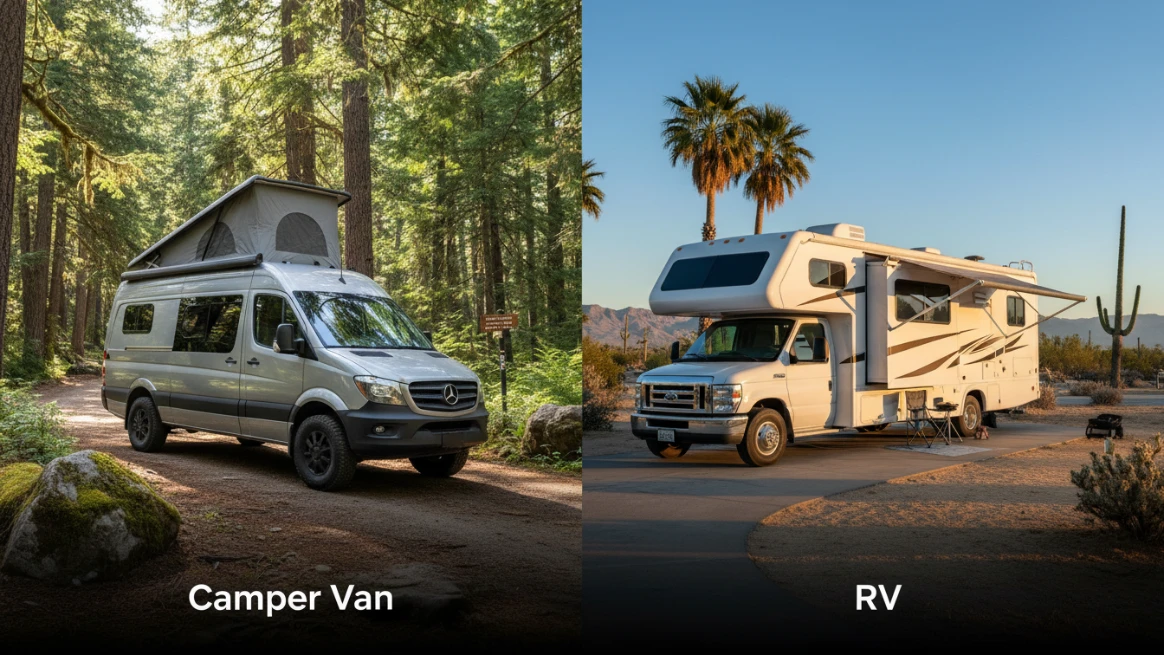
Thinking about starting a rental business in the travel industry? Your first big decision is whether to focus on camper vans or RVs. This choice impacts your initial investment, ongoing costs, target customers, and growth potential.
Camper vans are smaller and more fuel-efficient, making them cheaper to buy and maintain. They appeal to couples and solo travelers seeking flexibility.
In contrast, RVs are larger and offer more amenities, attracting families and groups who prioritize comfort. While RVs command higher rental fees, their maintenance and storage costs are also greater.
In terms of profit, camper vans often see higher occupancy due to their ease of driving and parking. RVs can earn more per rental but might have more downtime.
When scaling your business, a fleet of camper vans is generally easier and faster to expand. RVs require more significant space and logistical support, suiting larger-scale operations from the outset.
Cost Comparison: Camper Van vs RV (Class C/A)
| Aspect | Camper Van | RV (Class C/A) |
|---|---|---|
| Purchase Price | $10K–120K (most common $20K–60K) | $35K–300K (most listings $44K–200K+) |
| Fuel Efficiency | 15–25 MPG (smaller vans can exceed 20 MPG) | 6–12 MPG (average 8–10 MPG) |
| Maintenance/Year | $1K–4K (simpler systems, lower upkeep) | $3K–10K (larger engines, complex systems) |
| Storage Space | Fits in small lots or driveways | Requires large dedicated storage (25–45 ft length) |
Disclaimer: These figures are estimates and for informational use only. Actual costs vary by location, vehicle condition, and other factors. This should not be considered financial or legal guidance.
How to Start a Camper Rental Business in 10 Steps
Ready to turn your camper van into a money-maker? Launching a rental business is more than just owning a van; it requires a solid plan and the right systems. Follow these ten steps to build a successful camper van rental business.
Step 1: Research the Market & Validate Demand

Before spending money, you need proof that people actually want to rent in your area. This step saves you from guesswork and helps you shape a business that fits real demand instead of assumptions.
Start by exploring search trends and travel patterns. Tools like Google Trends show growing interest in camper rentals, with searches rising steadily in recent years. Pair this with tourism data to see when people travel and how long they usually rent.
Next, understand your audience. Families often look for space and comfort, tourists prefer short trips, while couples and solo travelers lean toward compact vans. Each group has different expectations, and knowing this helps you design better offers.
Then, focus on your location. Coastal areas, national parks, and scenic routes often bring higher occupancy. Look at local travel data, rental platforms, and seasonal trends to see when demand peaks and when it slows down.
Finally, study your competitors closely. Check their pricing, reviews, and vehicle types. Notice what customers praise and where complaints appear. These gaps give you a chance to stand out without trying to reinvent everything from scratch.
Step 2: Choose Your Camper Rental Niche

Once you know your market, it's time to choose a niche. A clear focus makes marketing easier and attracts the right customers faster.
You could offer budget-friendly camper vans for simple, affordable trips. These are easier to maintain and book up quickly during peak seasons.
Alternatively, you can target premium customers with luxury RV rentals. While the initial investment is higher, so are the returns per booking.
There's also a growing market for adventure-ready vans built for off-road travel, which attract customers willing to pay more for unique experiences.
Some owners even focus on event-based rentals for festivals or weddings to generate quick income. Choosing a niche early helps you focus your budget and efforts effectively.
Step 3: Create a Camper Rental Business Plan

At RentMy, we believe creating a strong business plan for your camper rental venture shouldn't be complicated. That's why we offer a free, professionally designed camper rental business plan template to help you get started. It comes in both PDF and editable Word versions to make it easy to customize.
📄 Free Camper Rental Business Plan Template
Enter your email to get instant access to both PDF and editable Word versions.
Disclaimer: This template for a camper rental business plan is offered for informational use only and is not financial or legal advice. You may need to modify it to meet your specific business goals and local regulations. We recommend consulting with business and legal experts before finalizing your plan or making financial decisions.
Step 4: Register Your Business & Handle Legal Setup

Before you can start taking bookings, you need to register your business to protect your income and avoid legal trouble.
Most owners choose between a sole proprietorship or an LLC. Many prefer setting up an LLC because it separates personal and business finances and offers better protection as you grow.
Once registered, get your tax identification number and open a business bank account. This keeps your finances organized from day one.
Licensing rules change depending on where you are. Some places need special rental permits, while others don't. Before you start, always check your local rules and how to charge the right sales tax to avoid fines.
Finally, learn about tax deductions to lower your tax bill. You can often write off expenses like maintenance, insurance, and marketing. If you're unsure, ask a professional to help you avoid mistakes.
Step 5: Buy or Lease Your Camper Vans
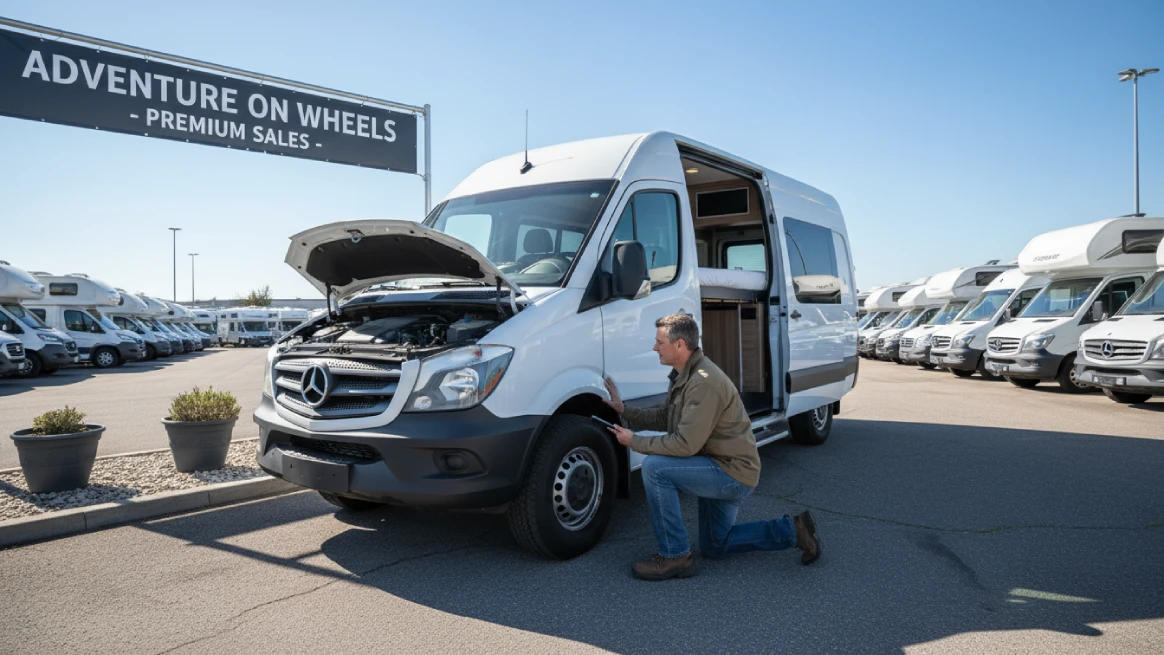
With your business set up, it's time to choose your first vehicle. This decision is key to your startup cost and how quickly you start earning.
Buying a used camper is often the most affordable route. This helps you test the market with less risk. New vehicles, however, offer better reliability and can attract higher-paying customers.
Popular models like converted cargo vans or compact RVs are a great starting point, as they balance comfort and cost, making them easier to rent out.
To maximize your earnings, start with a small inventory of items that bring a high return on investment. As you gather data, you can expand your offerings strategically.
Some owners also explore leasing to lower initial costs or importing for unique vehicle options.
Ultimately, pick a vehicle that fits your market, not just your budget. A well-matched camper gets booked more often and pays for itself faster.
Step 6: Get Camper Rental Business Insurance

Once your vehicle is ready, it's time to protect your investment. A single accident can wipe out your profits, so having the right coverage is a must.
Comprehensive camper rental business insurance should include liability coverage for any damage or injuries that happen during a rental. It's also wise to have collision coverage for accident repairs and theft protection in case your vehicle is stolen or damaged.
Remember, your personal vehicle insurance won't cover commercial use. You'll need a specific policy for rentals. While some platforms offer coverage, independent businesses must secure their own. Costs will vary based on your vehicle and location.
Some trusted U.S. insurance companies that offer or support camper van rental insurance include MBA Insurance, Roamly, Good Sam Insurance Agency, Progressive, and State Farm. It's a good idea to compare policies to find coverage that fits your rental model.
Though it's an added expense, proper insurance for your rental business assures you and builds trust with your customers.
Review your policy annually to ensure you're always protected against changing risks.
Step 7: Set Your Pricing Strategy

Now that your camper is ready, it's time to figure out your pricing. This isn't just about picking a number, it affects how many bookings you get and how quickly you earn back your investment.
To begin, set prices that attract customers while still being profitable. Most camper rentals go for $100 to $300 per day. Consider offering a 20-30% discount for weekly bookings to encourage longer trips and secure a steady income.
Adjust your rates with the seasons, raising them by 30% or more during holidays and offering small discounts in the off-season to keep your camper booked.
You can also use bundle pricing, combining the rental with extras like camping gear for a higher perceived value.
Don't forget add-ons like GPS or extra mileage, which can boost your revenue. Test different rates to find what works, but make sure your pricing doesn't hurt your profits.
Step 8: Build Your Booking System

Once you've set your prices, the next step is to make booking as simple and fast as possible. If the process is difficult, potential customers will go elsewhere, regardless of how great your offer is.
Start by listing your camper on rental marketplaces like Outdoorsy, GoCamp, RentMy Rental Directory. Listing your business in these directories, helps local customers find you quickly when they're comparing options.
Although marketplaces help you get started, having your own rental website lets you stay in control and skip extra fees.
Since over 60% of people browse on mobile, ensure your site is clean and mobile-friendly.
You can use online booking tools to manage calendars and payment gateways like Stripe to handle transactions automatically.
Don't have time to build a website from scratch? Platforms like RentMy provide ready-made, mobile-friendly rental sites with booking and payment tools already built-in. This lets you take direct bookings without the technical hassle.
Launch your booking system in minutes
Get a ready-made rental website with bookings and payments already built in.
- Free 7-day trial
- No credit card required
Step 9: Launch Marketing & SEO Strategy

With your system ready, the next step is getting people to actually find your business. Good marketing brings steady bookings without relying only on paid ads.
Start with search visibility, a key part of good SEO for your rental business. Focus on local and informational searches like how to start a camper rental business and location-based terms. This helps your site appear when travelers are actively looking for rentals nearby.
Your Google Business Profile is an important factor as well. It helps your business show up on Google Maps, where people check reviews, directions, and contact details. Strong reviews build trust and increase the chances of getting bookings.
Social media adds a human touch. With 5.66 billion users worldwide, sharing van tours, travel stories, and real customer experiences builds interest over time. Short videos and photos help people imagine their trip before they even click "book."
Email marketing is another powerful channel for sending personalized offers, travel tips, and early-bird discounts to past and potential customers. This channel generated $9.5 billion in revenue in 2024.
You can also collaborate with small travel creators and influencers. Offering a free trip in exchange for content often brings strong returns.
Combine SEO and social media to make your marketing work for you. For faster growth, RentMy Marketing Services can manage your SEO, paid ads, and conversion-focused campaigns tailored for your camper rental businesses.
Step 10: Scale & Grow Your Camper Rental Business

Once bookings are consistent, it's time to focus on growth.
Scaling at the right time can multiply your income quickly. Many owners expand by using profits to add more vehicles, keeping risks low while increasing earning potential.
A steady rise in bookings signals your market is ready for more supply.
As your fleet grows, you may need help. Hiring support for cleaning, delivery, or customer service frees up your time for bigger decisions.
You can also explore partnerships with travel agencies or campgrounds to attract new customers without high marketing costs, which helps fill your calendar during slower periods.
Growth doesn't need to be rushed. Focus on steady improvements, and your camper rental business will naturally scale.
Common Camper Rental Mistakes to Avoid
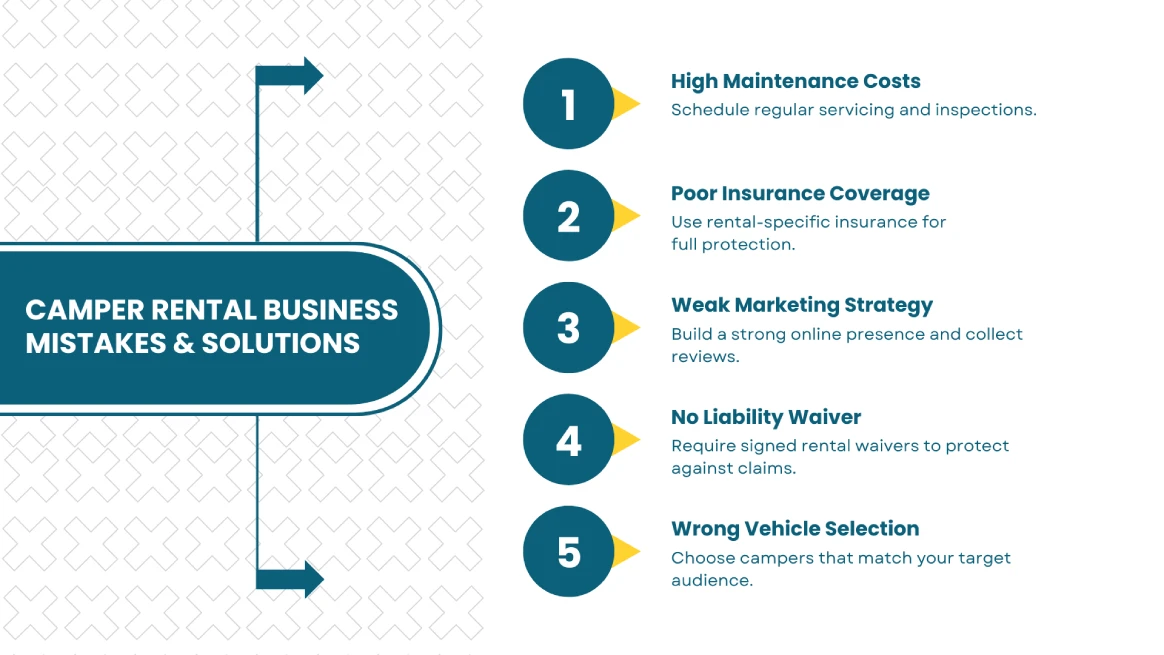
Even with a solid plan, small mistakes can drain your profits. Knowing what to avoid is key to saving money, time, and stress.
One common pitfall is underestimating maintenance costs. Regular servicing, cleaning, and repairs are essential. Neglecting them leads to breakdowns, bad reviews, and lost bookings.
Another costly error is poor insurance coverage. Without proper protection, a single accident can be financially devastating. Ensure your policy specifically covers rentals.
Another costly mistake is not using a proper rental liability waiver. This document ensures customers acknowledge the risks of using rented equipment and protects your business from legal claims. Without a signed rental liability waiver, you could be held liable for damages or injuries.
Many beginners also lack a clear marketing strategy. Without visibility, even the best camper will sit unused. A consistent online presence and positive reviews are vital for attracting customers.
Equally important is choosing the wrong vehicles. If your camper doesn't meet your target audience's needs, it won't get booked.
Finally, simple systems make a big difference. Using rental management software with built-in asset tracking protects your investment and streamlines daily operations as you grow.
Tools You'll Need to Run Your Camper Rental Business Smoothly
Manually managing your rental fleet can lead to double bookings, missed vehicle checks, and lost profits. As you grow, these small mistakes become costly and can harm your reputation.
To avoid this, many owners use rental management software. GPS tracking systems help monitor your vehicles' locations and prevent misuse, while maintenance tracking tools keep your fleet in top condition by scheduling regular servicing.
However, balancing separate tools can be tricky. This is where an all-in-one system like RentMy simplifies everything. You can manage bookings, accept payments, handle agreements, track availability, and even schedule vehicle maintenance, all from one dashboard without jumping between tools.
With automated reminders and real-time updates, you can prevent problems before they happen.
By automating your operations, you can stop fixing issues and start focusing on growing your camper rental business.
Keep your fleet organized and ready
Track availability, maintenance, and rentals without missing a step.
- Free 7-day trial
- No credit card required
Conclusion
That's a wrap! You now have the complete guide for how to start a camper rental business, covering everything from choosing your camper to pricing, marketing, and growing your fleet.
The real adventure begins when you stop reading and start doing. Even one well-managed van can become a source of steady income. The small steps you take today will determine how quickly your business takes off.
If you've been dreaming of this, now's the time to hit the gas. Start simple, find your market, and build from there. The open road is calling, it's time to take the first step.
FAQs
Is an RV Rental Business Profitable?
Yes, it can be profitable with the right setup. Many owners earn around $1,200 to $3,700 per month per vehicle at 40% to 50% occupancy. Yearly income can reach $7,500 to $30,000 per RV. However, profit depends on location, demand, pricing, and maintenance.
What is the 3-3-3 Rule for RVs?
The 3-3-3 rule is a simple guideline for stress-free RV trips: drive no more than 300 miles per day, arrive at campgrounds by 3 p.m., and stay at least 3 nights per spot. It helps avoid fatigue, ensures setup time in daylight, and allows relaxation before moving on. Many RVers use it for safer, enjoyable travel.
What is the 10 Year Rule for RVs?
The 10-year rule is a guideline some RV parks use to prevent RVs older than 10 years from staying. This is not a law, but a way for parks to maintain their appearance and avoid issues with older vehicles. If your older RV is in good condition, they might make an exception.
How Many Campers Do I Need To Start?
You can start with just one vehicle. Many successful businesses begin small, test demand, and grow gradually. Starting with one camper helps reduce risk while giving you real market insights before expanding your fleet.
What Is The Best Location For A Camper Rental Business?
Locations near tourist attractions perform best. Areas close to beaches, national parks, or scenic routes usually see higher demand. Regions with year-round mild weather can also bring more consistent bookings compared to seasonal markets.